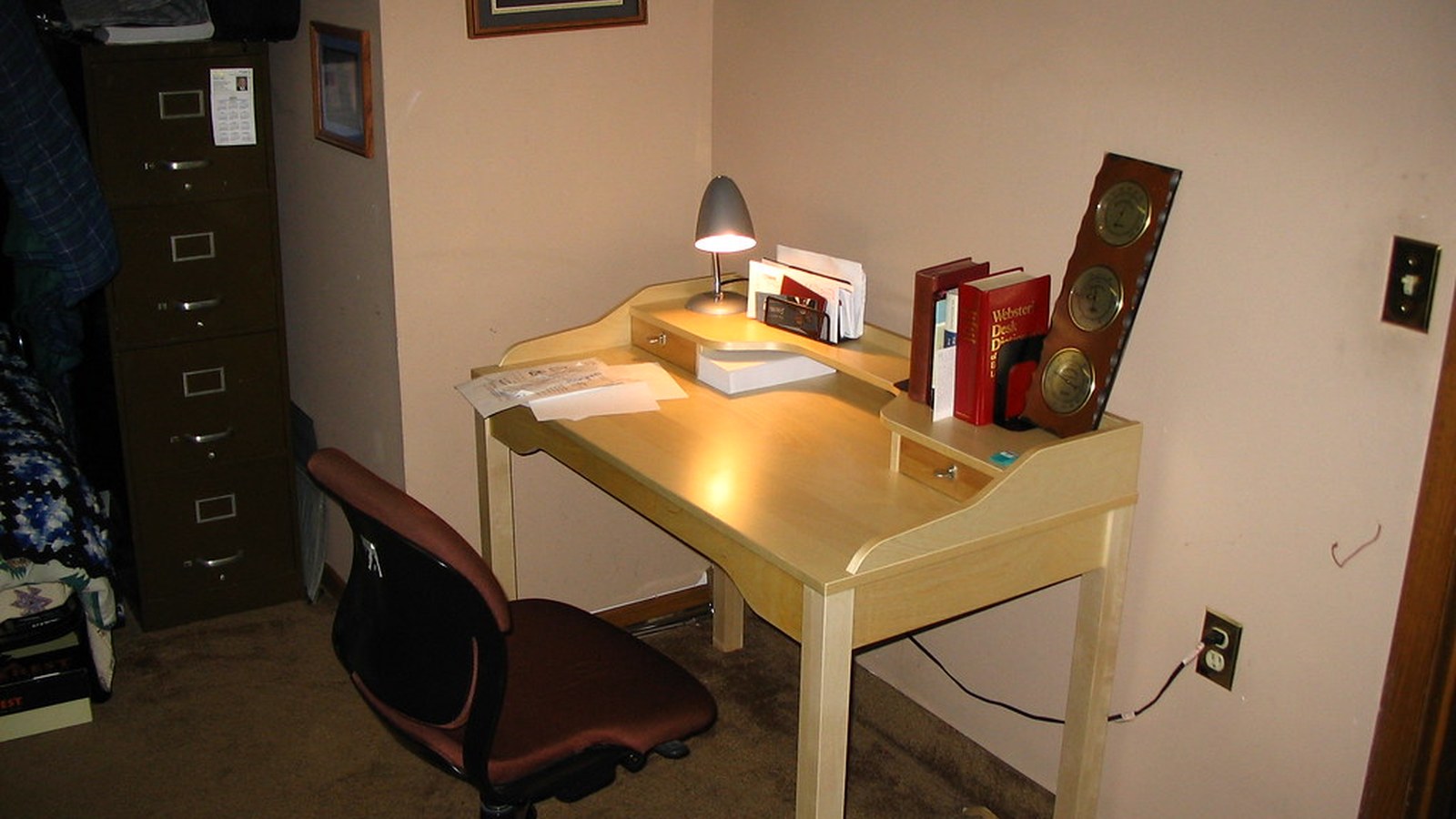
How to Organize a Desk Without Drawers and Still Keep It Clear
If your desk has no drawers, it can feel like every object has to live out in the open. Pens, chargers, notebooks, paper, and small accessories all end up competing for the same limited surface, so the desk starts to feel messy even when you do not own that much.
That is why organizing a desk without drawers is usually not about finding more hidden storage right away. It is about deciding what truly deserves desk space, what can live nearby, and how to keep the visible surface from becoming the default home for everything.
If you want help making that call on your real setup, TidySnap can turn one desk photo into a visual cleanup plan that shows what should stay, what should move, and what is taking up too much room.
Quick Answer: How Do You Organize a Desk Without Drawers?
If your desk has no drawers, start here:
- keep only daily-use items on the main surface
- group small tools into one container instead of several loose piles
- move low-use items to a nearby shelf, cart, or wall-side storage
- give paper one visible boundary instead of letting it spread
- route active cables to one edge
- leave part of the desk intentionally empty
- reset the surface in two or three minutes each day
Most desks without drawers become easier to manage once the surface stops doing every job at once.
Why Drawer-Free Desks Get Cluttered So Fast
A desk without drawers is not automatically a bad desk. It just removes one easy hiding place, which means the layout has to work harder.
Common problems include:
- every useful object staying visible all day
- small accessories having no single home
- paper landing flat across the desk
- cables collecting near the center
- backup items being treated like daily tools
- the desk becoming both workspace and storage shelf
Without clear rules, the surface fills up faster because there is nowhere to absorb the overflow.
The Best Rule: Surface, Side, and Elsewhere
If you do not have drawers, a simple three-layer rule helps a lot.
| Zone | What belongs there | Example |
|---|---|---|
| Surface | only current-task and daily-use items | laptop, keyboard, active notebook |
| Side | useful but not constantly needed items | charger, paper tray, pen cup, headphones |
| Elsewhere | weekly-use or backup items | extra cables, spare notebooks, archive paper |
This works because the desk surface stops acting like the home for every category at once.
Step-by-Step: How to Organize a Desk Without Drawers
1. Clear the surface completely first
Before you optimize anything, remove the easy clutter:
- trash
- wrappers
- dishes or bottles
- packaging
- items that belong in another room
- old paper with no next step
A clean starting surface makes it much easier to see which items truly need desk access.
2. Decide what deserves desk space every day
Desk space should be treated like premium real estate, especially if you have no drawers.
Usually the main surface only needs:
- your main computer setup
- one active notebook or planning surface
- one holder for essential tools
- one drink if space allows
If an item does not support today’s work directly, it usually does not belong in the center.
3. Group loose tools into one holder
A drawer-free desk gets crowded when small objects are scattered everywhere.
Put items like these into one container or one controlled zone:
- pens
- markers
- sticky notes
- adapters
- earbuds
- paper clips
This matters because ten small objects spread across a desk feel heavier than one small grouped station.
4. Use nearby storage before buying more furniture
Many people assume a desk without drawers requires a whole new furniture setup. Often it does not.
Before buying anything major, try:
- one shelf beside or above the desk
- one rolling cart nearby
- one tray for paper
- one basket for overflow tools
- one vertical file holder
If your main issue is lack of space in general, also read How to Organize Your Workspace Without Extra Storage.
5. Give paper one visible boundary
Paper can take over a drawer-free desk very quickly because it spreads flat.
A better rule:
- active paper can stay out
- review paper gets one tray or stack
- old paper leaves the desk completely
- reference paper moves to vertical storage or another nearby zone
If paperwork is the main source of mess, read How to Organize Office Paperwork Without Letting It Take Over Your Desk.
6. Move backup items off the surface
Drawer-free desks often get crowded with low-use items such as:
- spare chargers
- extra notebooks
- duplicate tools
- unopened supplies
- backup batteries
- extra cables
These can stay nearby, but they usually should not stay visible.
7. Fix cables early
Cables become more noticeable on open desks because there is less visual structure hiding them.
Use simple rules:
- keep only active cables visible
- route them to one side
- avoid letting them cross the center
- move long spare cords off the desk
- keep chargers near the support zone, not the work zone
8. Leave part of the desk empty on purpose
One of the biggest mistakes with drawer-free desks is filling every open inch.
But an organized desk is not a fully occupied desk. It needs open space for:
- writing
- moving a notebook
- temporary task materials
- switching from one task to another
Open space is part of the system, not wasted space.
What to Use Instead of Drawers
If you need functional substitutes, the most useful options are usually:
- a pen cup
- a paper tray
- a vertical file holder
- a rolling cart
- a slim nearby shelf
- a small lidded box for tiny accessories
The goal is not to recreate a full dresser beside the desk. The goal is to keep the surface from becoming overflow storage.
How to Organize a Small Desk Without Drawers
If your desk is both small and drawer-free, the rules need to be even stricter.
Focus on:
- keeping the center clear
- limiting visible categories
- storing only daily-use tools at arm’s reach
- using vertical or side storage before surface storage
- doing a quick reset every evening
For a more size-specific setup, read How to Organize Your Workspace on a Small Desk.
Where TidySnap Helps
A lot of people know they have too much on the surface, but still struggle with questions like:
- what actually belongs here every day?
- which objects are making the desk feel crowded?
- what can move nearby instead of staying visible?
- where is the real clutter hotspot?
TidySnap helps answer those questions from your actual desk photo. It can help you:
- identify overloaded areas
- separate daily-use tools from overflow
- see what is blocking usable surface space
- create a visual after-state you can reset back to later
That makes drawer-free organization much easier to act on.
A 10-Minute Reset for a Desk Without Drawers
If your desk needs a quick reset, try this:
| Minute | Action | Goal |
|---|---|---|
| 0-2 | remove trash and unrelated items | cut easy clutter |
| 2-4 | clear the center of the desk | restore work space |
| 4-6 | group small tools into one holder | reduce surface scatter |
| 6-8 | move low-use items to side storage | protect premium space |
| 8-10 | stack paper and route visible cables | calm the desk visually |
This works because it restores structure without requiring hidden storage.
Common Mistakes With Drawer-Free Desks
The biggest ones are:
- treating every useful object like it deserves visibility
- storing paper flat instead of giving it boundaries
- using the center as overflow space
- buying too many tiny containers that stay on the surface
- keeping backup items within reach all day
- forgetting to reserve empty space for actual work
A drawer-free desk needs stronger decisions, not necessarily more products.
Final Takeaway
If you want to organize a desk without drawers, do not start by assuming the desk is the problem. Start by making the surface more selective.
Keep only daily-use items visible, group loose tools, control paper, move overflow nearby, and protect empty space. That is what makes a drawer-free desk feel clear enough to work on every day.
And if you want help deciding what should stay or go on your real setup, TidySnap can turn one desk photo into a visual organization plan you can actually follow.
FAQ
How do I organize a desk if it has no drawers?
Keep only daily-use items on the surface, group small tools into one holder, move low-use items nearby, and give paper one clear boundary instead of letting it spread.
What can I use instead of desk drawers?
A nearby shelf, rolling cart, paper tray, vertical file holder, or small accessory box can often replace what drawers would normally handle.
How do I keep a drawer-free desk from looking messy?
Limit visible categories, keep the center clear, control cables, and avoid letting backup items stay on the surface. A short daily reset also matters a lot.
Can a small desk without drawers still work well?
Yes. It just needs stricter surface rules. Only daily-use tools should stay visible, and nearby storage needs to carry more of the overflow.
Can TidySnap help with a desk that has no drawers?
Yes. TidySnap can analyze a photo of your desk and help you see which visible items should stay, which should move nearby, and what is taking up too much surface space.