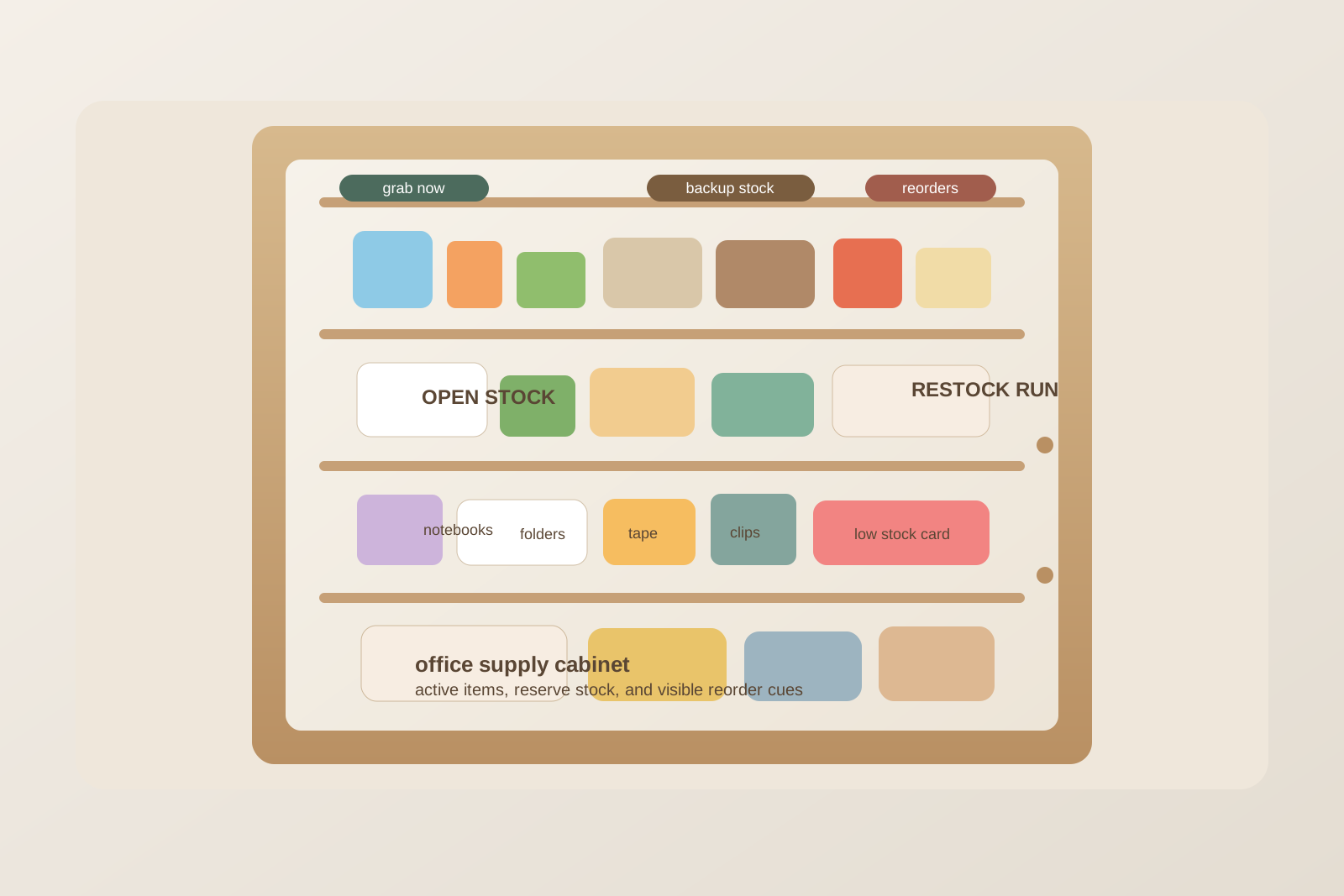
Office Supply Cabinet Organization for Reorders, Open Stock, and Fast Restock Runs
An office supply cabinet usually does not feel chaotic because it is full.
It feels chaotic because nobody can tell what is ready to use, what is backup stock, and what is almost out until they are already standing there looking for tape, envelopes, or a fresh notebook five minutes before a meeting.
One shelf has unopened marker packs. Another has two half-used packs because nobody wanted to finish the first one. Pens are mixed with highlighters, binder clips are loose in the back, and the sticky note that says to reorder legal pads is buried under a box of labels. Then somebody needs to restock the front desk, refill the meeting room, or grab shipping supplies fast, and the cabinet turns into a small daily delay instead of a support system.
If you are trying to improve office supply cabinet organization, the goal is not making every shelf look perfectly styled. The goal is making common supplies easy to grab, backup stock easy to count, and low-stock decisions easy to spot before the cabinet becomes a scavenger hunt.
Quick answer
If you need to organize an office supply cabinet at work, start with these moves:
- separate grab-now supplies from true backup stock
- keep opened packs in one clearly marked section instead of scattering them across shelves
- group supplies by restock destination, not only by object type
- keep reorder signals visible where stock actually gets checked
- stop rare-use items from sitting in the same prime space as daily supplies
- give damaged, mismatched, or partial items one exception zone
- reset the cabinet on a short schedule before shortages become surprises
That usually helps more than buying extra bins before the cabinet has a clear flow.
Why office supply cabinets get messy faster than expected
A supply cabinet creates a different kind of clutter than a desk, printer station, or receiving area.
The problem is usually not one big mess event.
The problem is repeated interruption.
Throughout the week, people keep opening the cabinet for small reasons:
- grabbing pens before a training session
- refilling envelopes at reception
- replacing tape near shipping supplies
- restocking notebooks for onboarding packets
- checking whether there is another ream of paper or another box of folders
- leaving half-used packs on the nearest shelf because they may be needed again soon
Those quick visits create a cabinet full of mixed statuses.
A single shelf may end up holding:
- unopened reserve stock
- partly used packs
- items already claimed for another area
- random extras that do not belong anywhere else
- handwritten reorder notes with no obvious next step
That is when the cabinet stops answering the question people actually have: Can I grab what I need right now without creating another loose pile?
Organize by supply status first, then by category
Many offices sort the cabinet by object type only.
Pens on one shelf. Tape on another. Folders somewhere else.
That sounds reasonable, but it often hides the bigger issue. If open stock, reserve stock, and almost-empty leftovers all sit together, the cabinet still forces people to guess.
A better setup gives each status a physical meaning.
| Zone | What belongs there | What should stay out |
|---|---|---|
| grab-now zone | the active pack or small working quantity for daily use | bulk backup cases and expired odds-and-ends |
| backup stock zone | unopened reserve items counted for future use | loose partial packs and one-off supplies |
| restock queue | items already earmarked for a desk, room, or station refill | general reserve stock |
| reorder signal zone | low-stock tags, reorder list, count notes, vendor reminders | random sticky notes hidden under boxes |
| exception zone | damaged packs, mismatched items, leftovers that need a decision | everyday supplies people need quickly |
This works because the cabinet becomes easier to read at a glance.
People do not need to inspect every shelf to know whether they are taking from the active layer or the reserve layer.
Group daily supplies by destination, not just by object name
This is one of the fastest ways to make a shared office cabinet easier to use.
A cabinet that is sorted only by supply type can still waste time. The pens may be together, but the front desk pens, meeting room markers, and onboarding packet supplies often travel in the same small restock run.
A more practical layout is to keep daily-use groups based on where supplies go next.
For example:
- one section for front desk or reception refills
- one section for meeting room and training room basics
- one section for general desk restock items
- one section for admin paper supplies like folders, envelopes, labels, and clips
- one section for less frequent specialty items
That way, a quick refill trip does not require touching five shelves.
You are organizing for workflow, not for a stationery catalog.
Keep one open pack per item in the active layer
Office cabinets get visually noisy when every partial pack stays visible.
One open box of pens is useful.
Three open boxes of pens on different shelves is how stock counts stop making sense.
A simple rule helps: keep one active pack in the grab-now zone and move unopened extras to backup stock. If another partial pack turns up, either merge it into the active pack if practical or move it to the exception zone until someone decides whether to keep it.
That rule cuts down on duplicate openings, half-used leftovers, and the feeling that supplies are both overbought and somehow unavailable.
Put reorder signals where the cabinet gets checked
A reorder note only helps if it is visible at the moment someone notices supply levels.
That means reorder signals should live inside or directly on the cabinet area, not in a separate notebook that nobody opens during a rushed restock.
Useful low-friction options include:
- a short reorder clipboard on the cabinet door
- a simple low-stock card in the backup zone
- one labeled pocket for vendor notes, item numbers, or common restock reminders
The point is not building a complex inventory system.
The point is making low-stock information hard to miss while someone is already counting what is left.
Stop rare-use items from stealing easy shelf space
Prime cabinet space should go to the things people reach for all the time.
If label sheets for one annual event are taking the same shelf position as daily envelopes, tape, and sticky notes, the cabinet is making common work harder than it needs to be.
Move low-frequency supplies higher, lower, or farther back.
Keep the easiest reach zones for supplies that create the most repeat traffic.
That usually includes:
- pens and markers
- sticky notes
- notebooks or legal pads
- folders and envelopes
- clips, tape, and small mailing basics
- common paper accessories used during front-desk or admin work
A cabinet feels more organized when its best space matches its real usage.
Give partial, odd, and problem items one decision lane
Every supply cabinet develops a category of items that do not fit neatly anywhere.
That might include:
- one damaged box of folders
- mixed binder clips from old packs
- a nearly empty label roll
- outdated branded notebooks
- off-size sleeves or forms that may or may not still be useful
If those items stay mixed into the main stock, they make the whole cabinet harder to trust.
Give them one small exception bin or shelf.
Then review that area on purpose instead of letting it silently spread through the rest of the cabinet.
Build the cabinet around faster restock runs
A good office supply cabinet should reduce interruptions, not create them.
That means a person doing a refill run should be able to:
- spot the active supply section quickly
- pull the few items needed for one destination
- see whether backup stock is still healthy
- notice low-stock warnings without digging
- close the cabinet without leaving another half-sorted shelf behind
If those five steps are easy, the cabinet will stay usable even when several people share it.
Use TidySnap when the cabinet feels more mixed than it looks
Sometimes an office supply cabinet does not look terrible in a quick glance, but the workflow around it is still slow.
That is a good time to use TidySnap.
Take one photo of the cabinet or the supply area, and TidySnap can help you spot where open stock, backup stock, reorder cues, and exception items are getting visually mixed. It is a practical way to plan a cleaner layout before you spend time moving every box around.
Final thought
The best office supply cabinet organization is not about fitting the most items onto a shelf.
It is about making common supplies easy to grab, reserve stock easy to count, and reorder decisions easy to catch early.
When the cabinet clearly separates active use, backup stock, refill work, and problem items, small supply runs stop interrupting the day so much. That is what makes the whole office feel easier to support.