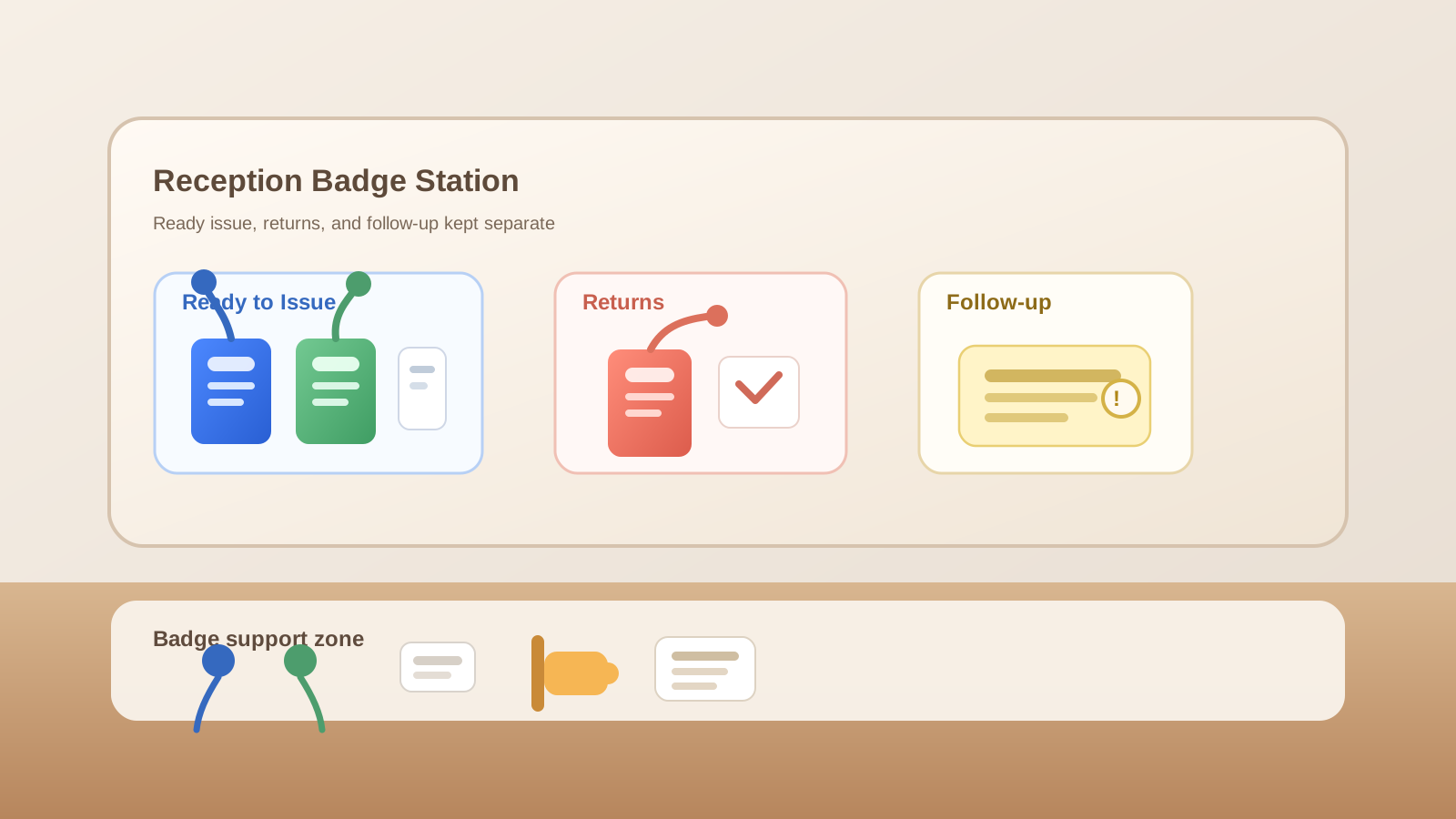
Office Reception Badge Station Organization for Visitors, Lanyards, and Return Checks
Reception clutter does not always start with deliveries or paperwork.
Sometimes it starts with five plastic badges, a handful of tangled lanyards, one visitor who just arrived early, and three older passes nobody is fully sure were checked back in.
A guest signs in, but the blank badges are mixed with yesterday’s returned ones. One lanyard has no clip. Another badge was handed back, but nobody marked it as returned. A host asks whether there is one more temporary pass for a contractor, and now the front desk is digging through a tray that is technically about badges but does not clearly say which badges are ready to issue right now.
If you need to organize an office reception badge station, the goal is not creating a fancier reception accessory zone. The goal is making badge issue, return, and follow-up feel obvious at a glance so the front desk does not keep solving the same small confusion all day.
Quick answer
To organize an office reception badge station:
- separate ready-to-issue badges from returned badges immediately
- keep lanyards, clips, and badge sleeves in one tight support zone instead of across the counter
- give missing-return badges a visible follow-up lane instead of mixing them with active stock
- keep visitor-facing pickup simple while moving backup badge supplies off the main desk
- use one fast return check step so handed-back badges do not disappear into reception clutter
That usually works better than keeping every badge, reel, sleeve, and sign-in note in one catch-all tray near the phone.
Why badge stations get messy faster than people expect
Badge stations create a specific kind of clutter.
The items are small, they all look related, and they move through several statuses in a single day. A reception area may be handling:
- blank or ready visitor badges
- badges already assigned for today’s arrivals
- badges that were returned and need to be cleared
- badges that should have been returned but were not
- spare lanyards, clips, and reels
- badge sleeves or holders
- notes about contractors, interviews, tours, or after-hours visitors
When those categories share one visual layer, the front desk loses the answer to a simple question: can I issue this badge right now, or is it part of another step?
That is why badge clutter feels bigger than it looks. The problem is not the size of the supplies. The problem is status confusion.
Organize by badge status before organizing by accessory type
A lot of offices store badge materials by object type only. Badges in one tray. Lanyards in another. Spare clips in a drawer. That sounds tidy, but it does not match the real workflow.
Reception staff usually need to know:
- what is ready for the next visitor
- what was just returned
- what is missing and needs follow-up
- what is backup stock, not today’s working layer
A practical setup works better when each status has one meaning:
| Zone | What belongs there | What should stay out |
|---|---|---|
| ready issue zone | cleared visitor badges, today’s expected temporary passes, one simple instruction card | returned badges waiting to be checked, broken clips, extra bulk stock |
| return zone | badges just handed back, used lanyards waiting for reset, items needing a quick count | fresh badges ready for the next guest |
| follow-up lane | missing-return notes, contractor badges still out, damaged items, unclear counts | routine ready stock |
| support zone | spare lanyards, reels, clips, sleeves, label tools | unrelated front-desk supplies and delivery paperwork |
This matters because a badge station should help the next handoff, not just contain plastic items.
Keep the ready issue zone smaller than you think
A crowded badge tray often feels prepared while actually slowing people down.
Most reception desks do not need every spare badge and every extra lanyard in the main issue area. They need a small working set that answers the next visitor fast.
That usually means keeping visible:
- only the badges likely to be issued during the current stretch
- one clean set of matching lanyards or clips
- one obvious place for a completed badge return
- one simple note or instruction if the office uses it
When bulk stock stays in the same tray, people start shuffling through extras to find the current working set. The station looks full, but the front desk gets slower.
Separate returned badges from ready badges immediately
This is where many offices lose control.
A visitor hands back a badge. It gets set beside the ready pile because someone will sort it in a minute. Another arrival walks up before that happens. Now the desk has badges that are:
- available now
- just returned
- not yet checked
- maybe still assigned in the log
Those should never look identical.
A better rule is simple: returned is not ready.
Every returned badge needs one visible pause point before it goes back into the issue zone. That short pause is where someone can confirm:
- the badge number or label matches expectations
- the lanyard or clip came back with it if required
- the badge is still usable for the next guest
- the sign-in or access note reflects that return
That small step prevents the ready zone from quietly filling up with unresolved returns.
Give missing returns their own follow-up lane
Badge stations stay messy when missing items live only in memory.
A host says a contractor should have returned badge 12. A visitor may have left with a lanyard. Someone remembers that an interview guest handed back the sleeve but not the clip. If those half-resolved details stay verbal, the next shift sees only a tray that feels short for unclear reasons.
Use one small follow-up lane for:
- badges still checked out after the visit window
- returns missing a lanyard or clip
- damaged sleeves or cracked badge holders
- notes on guest badges that need deactivation, relabeling, or reassignment
That keeps exceptions from blending into the live issue area.
Stop the badge station from borrowing space from the whole reception desk
At many offices, badge supplies spread because they do not have a boundary.
The badge tray touches the sign-in sheet. Spare lanyards sit near the keyboard. Extra clips drift into the drawer with pens. Returned badges land beside packages because that space happened to be open.
A tighter support zone works better.
Keep the badge-related extras together:
- spare lanyards
- clips or badge reels
- sleeves or holders
- label materials if you use them
- one small cleaning or reset supply if needed
Everything else should stay out. Badge stations get harder to trust when they start sharing space with mail, office supplies, sticky notes, or delivery paperwork.
Build one short return check into the reception routine
You do not need a complicated visitor-management ritual to keep badge clutter down.
You usually need one repeatable return check:
- place the returned badge in the return zone, not the ready zone
- confirm whether the lanyard or clip came back with it
- clear or note the return in your normal tracking method
- move the badge back to ready only after that reset is done
- move anything incomplete into follow-up immediately
That routine is faster than reconstructing badge history later from memory and mixed desk piles.
Four signs the badge station is carrying too much confusion
1. Staff keep counting badges manually before every busy arrival block
That usually means ready stock and unresolved returns are mixed together.
2. Returned badges get dropped wherever there is room
That usually means the station has no true return zone.
3. Lanyards and clips keep going missing even when badge counts look close
That usually means support items are drifting without a defined boundary.
4. Reception keeps a growing pile of “probably returned” items
That usually means follow-up cases have no lane of their own.
Where TidySnap helps
Badge stations are easy to overlook because they occupy such a small footprint. In practice, a real photo often makes the pattern obvious: returned badges sitting in the issue area, spare lanyards spreading into the main desk, and missing-return notes hiding among front-desk clutter. TidySnap can help turn that real reception setup into a clearer layout for ready badges, returns, follow-up items, and support supplies.
FAQ
What should stay in the ready badge zone?
Only badges that are cleared to issue, plus the small number of lanyards or clips needed to hand them out smoothly.
Should returned badges go straight back into the issue tray?
Usually no. A short return check helps confirm the badge, accessory, and status before it becomes ready stock again.
Where should spare lanyards and clips go?
Keep them in one badge support zone close enough to use quickly but separate from the active issue lane.
Why does the front desk keep feeling messy even though badges are small?
Because the problem is not size. It is that ready badges, returned badges, and missing-return follow-ups all create different actions but often look the same when they share one tray.