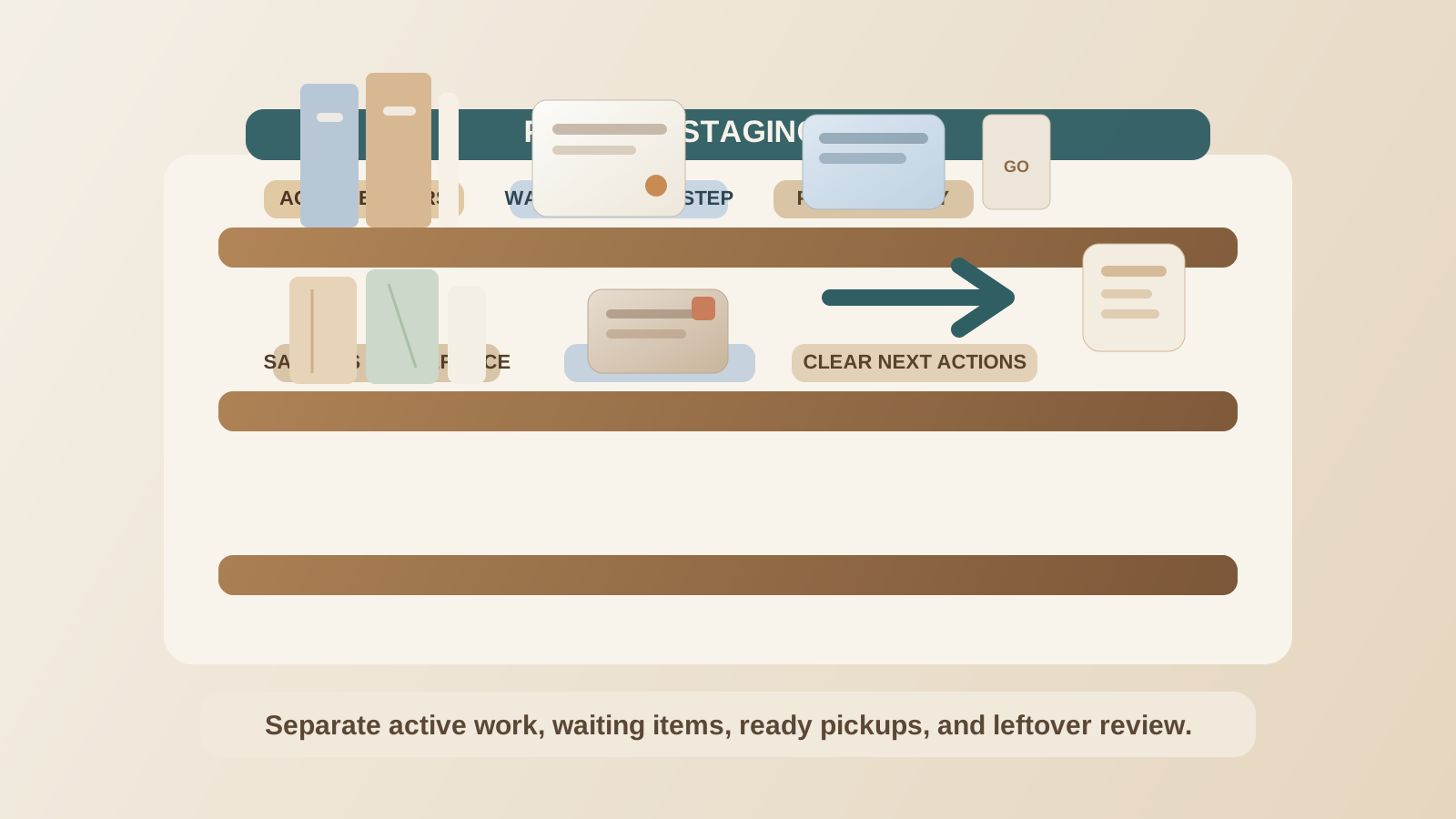
Office Project Staging Shelf Organization for Active Binders, Samples, and Pickup-Ready Packets
A project shelf usually starts as a helpful idea.
One binder needs to go to a manager later this afternoon. A sample kit is waiting for final approval. Printed packets are ready for pickup, but nobody wants to leave them on a desk where they will get mixed with regular paperwork. So everything lands on one shared shelf for “now.”
Then “now” turns into a week.
A finished packet stack sits beside a binder that still needs one signature. Swatch books lean against old meeting leftovers because they are all project-related enough to feel like they belong together. Someone adds one more labeled folder because the shelf already looks like the place for in-between work. Before long, the shelf is not staging anything. It is holding several project states in one visible pile and making nearby desks do the rest.
If you need to organize an office project staging shelf, the goal is not making it look like display storage. The goal is making active binders, sample materials, pending approvals, and pickup-ready packets easy to separate so people can tell what is moving, what is blocked, and what should already be gone.
Quick answer
An office project staging shelf usually works better when you:
- separate ready-to-leave items from items still waiting on one step
- keep active binders in one lane instead of mixing them with loose packet stacks
- give samples and reference materials their own boundary so they do not lean into live work
- keep one small review area for unclear leftovers, old drafts, and abandoned project pieces
- remove completed pickups fast so the shelf does not become quiet backlog storage
That usually works better than adding more bins to a shelf that still mixes active project flow with things that are simply lingering.
Why project staging shelves become clutter traps
A staging shelf supports several office moments that look similar from a distance but behave very differently:
- a binder that is still being updated
- a packet set that is complete and ready for pickup
- sample materials waiting for approval or comparison
- handoff items someone needs later today
- leftovers from a finished project that were never cleared properly
- loose notes, labels, or covers someone parked there because the shelf felt safer than a desk
That mix is what makes the shelf confusing.
Everything looks temporary, so everything gets treated like it can share space for a little while. But a live binder, an approval hold, and a pickup-ready packet do not need the same kind of visibility. When they all land in one layer, the shelf stops answering a basic question: What should move next, and what is just occupying good space?
Organize the shelf by next action, not by object type alone
A lot of offices stage projects by item category only. Binders together. Samples together. Packets wherever they fit.
That sounds reasonable, but it still makes people decode status every time they look at the shelf.
A more useful setup gives each section a job:
| Zone | What belongs there | What stays out |
|---|---|---|
| active binders lane | binders or folders still being used this week, with a clear current owner or task | completed packets, old reference books, and random loose papers |
| waiting on one step lane | items blocked by one approval, one signature, one missing insert, or one final check | fully finished handoffs and long-term reference material |
| pickup-ready lane | completed packets, labeled handoff folders, or outgoing sets that should leave soon | draft materials and unfinished work |
| sample and reference lane | swatches, product samples, look books, or comparison materials still relevant to current projects | abandoned leftovers from closed projects |
| review lane | unclear extras, old drafts, duplicate covers, and items nobody has claimed | the live work people need to trust |
This works because a staging shelf is not only storage.
It is a project traffic signal.
Keep the pickup-ready lane separate from active work
This is the distinction that usually fixes the shelf fastest.
A packet stack that is ready to leave should not live beside a binder that still needs edits. Once those states blend together, people stop trusting the shelf. They either recheck finished items unnecessarily or miss the fact that something urgent is still stuck behind reference material.
A better rule is simple:
- if it is ready for pickup, it gets one clean exit lane
- if it still needs work, it stays out of that lane
- if nobody knows which status it is in, it goes to review first
That helps the shelf communicate movement instead of just holding office-looking things.
Give active binders a narrow home instead of a spreading footprint
Binders create a specific kind of clutter because they stand upright well enough to feel organized even when they are not.
One active binder becomes three. Then a large folder lies flat beside them. Then a stack of paper clips, meeting notes, or draft inserts sneaks into the same section because it feels project-adjacent. The shelf still looks intentional for a while, but the binders are quietly taking over more than one workflow.
Keep the binder lane tighter than feels natural:
- only current binders stay there
- each binder should have a clear project or owner label
- loose papers do not get tucked beside the spine “for later”
- inactive binders leave the staging shelf and go to real storage
The shelf should support movement this week, not preserve the memory of every project that touched it.
Stop sample materials from leaning into live paperwork
Samples, swatches, and reference pieces are useful because they stay visible.
They are also risky because they are awkward to stack, easy to lean, and hard to tell apart once several projects overlap. If they share the same zone as outgoing packets or active approval folders, they quickly turn the whole shelf into visual friction.
A cleaner split works better:
- keep samples in one defined lane or magazine-file style section
- group them by current project or decision, not by vague material category alone
- remove expired or superseded options quickly
- do not let sample packaging become support for live paper stacks
That way the shelf still supports comparison without making every project look unfinished.
Treat waiting-on-one-step items as a short queue, not a parking lot
Many office staging shelves fail because the “almost done” zone grows without a time limit.
One folder is waiting for a signature. One packet needs one revised page. One sample set is waiting for a go-ahead from someone who is out until tomorrow. Those are all normal pauses. The problem starts when the shelf treats all paused work as equally acceptable to keep indefinitely.
Use one small waiting-on-one-step lane for items that are truly close to moving.
That lane should hold things like:
- one signature hold
- one final insert still missing
- one approval review set
- one packet waiting for a named pickup
It should not hold whole project backlogs.
If something sits there long enough that nobody remembers the blocker, it no longer belongs in an active staging lane.
Give loose project extras a review lane instead of letting them disguise themselves as current work
Project shelves collect little leftovers fast:
- duplicate cover sheets
- old label sleeves
- extra tabs from a previous set
- a sample card from a closed job
- an unlabeled folder that might still matter
Those pieces are easy to ignore because they are small and office-looking. But together they make the shelf feel busier and less trustworthy.
Use one review lane for anything that is:
- unlabeled
- duplicated without a clear reason
- disconnected from an active project
- waiting on a decision nobody has written down
Keep that review lane intentionally small. If it expands, the shelf is already carrying unresolved admin instead of useful staging.
Protect one visible exit path
A project staging shelf is only helpful if completed work actually leaves.
That means pickup-ready packets, approved binders, or labeled handoff sets should move out on a clear rhythm instead of staying there until someone happens to notice them. If finished work remains on the shelf too long, the area starts teaching everyone that completion does not change where things live.
Even a simple rule helps:
- same-day pickups stay in the exit lane only
- next-day handoffs stay grouped and labeled
- anything older gets reviewed before more items pile on top
The point is not speed for its own sake. It is keeping the shelf honest.
A practical reset for a crowded office project shelf
If the shelf already feels mixed up, do a fast reset in this order:
- pull out anything clearly finished and move it to pickup or delivery right away
- stand current binders together and remove loose paper that does not belong with them
- group samples and reference pieces into one lane with obvious project labels
- create one small queue for items waiting on one final step
- move old drafts, duplicate parts, and mystery leftovers into review
- leave one open slice of shelf space so the next project does not land on top of unresolved work
That usually improves the shelf faster than fully relabeling every project at once.
Where TidySnap helps
TidySnap works well when you are trying to keep project staging visible without turning it into one more manual sorting job.
You can photograph a mixed shelf, see which items belong to active work versus pickup-ready handoff versus review, and use that snapshot to reset the shelf around real next actions instead of vague categories. That is especially helpful when binders, samples, and packets all look related enough to drift together.
Final thought
A good project staging shelf should reduce uncertainty, not store it neatly.
When active binders, pending approvals, sample materials, and pickup-ready packets each have a clearer role, the shelf stops acting like a polite clutter zone. It starts acting like a real handoff point that protects desks, speeds up project movement, and makes shared office work easier to read at a glance.