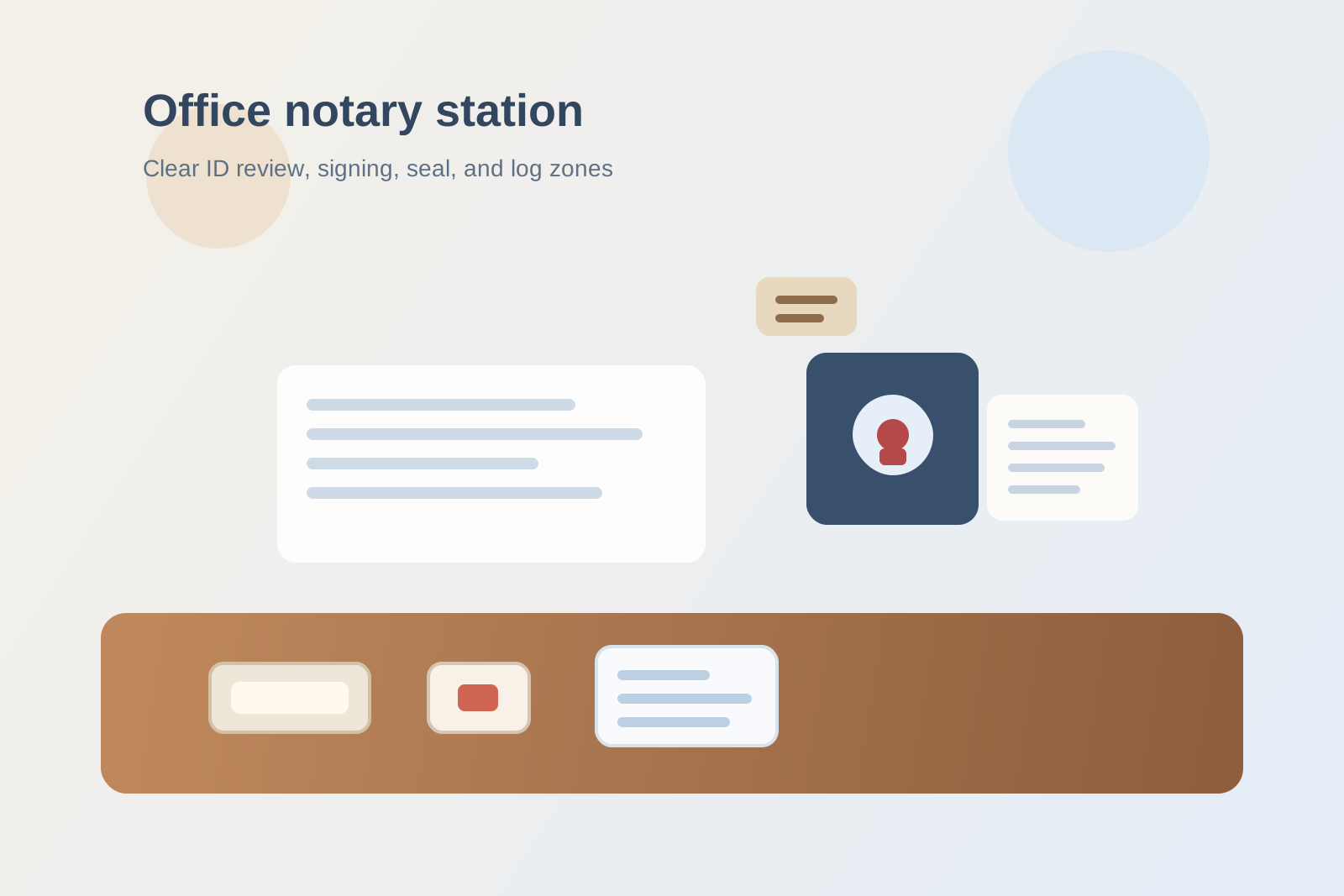
Office Notary Station Organization for Seals, ID Checks, and Signature Logs
A notary station gets messy because one document signing usually creates five tiny side tasks.
Someone hands over a packet that still needs one page flagged. An ID comes out for review, then sits on the desk while the signer finds another document. The seal pouch stays open because the next person is already waiting. A journal or signature log gets pushed to one side to make room for initials, and now the pen for the log is mixed with the pens for the packet. Nothing looks dramatic, but the desk slowly turns into a place where active legal paperwork, identity checks, and leftover tools all pile into the same few square feet.
If you want to organize an office notary station, the goal is not making it look formal. The goal is making the signing flow easy to read so documents move from check-in to witness to seal to log to return without stalling out on the desk.
Quick answer
An office notary station works better when each step has its own small lane. Keep one check-in area for the packet and ID review, one signing surface that stays mostly clear, one protected tool zone for the seal and stamp supplies, and one short completion zone for the log, finished packet, and return handoff. The station should make it obvious what is waiting for identity review, what is being signed now, what tools are controlled, and what paperwork is ready to leave with the signer.
Why notary desks get cluttered so quickly
A notary station combines two kinds of work that do not mix well on one surface.
First, there is the document itself: signature pages, tabs, witness lines, envelopes, and supporting pages. Second, there is the controlled process around the document: identity checks, journal entries, seal use, and the final handoff. Both feel urgent in the moment, so both stay visible.
That is why notary clutter often looks harmless at first. A single job leaves behind:
- one packet that is active right now
- one ID or ID copy that should not wander
- one journal or signature log that needs room to open
- one seal or stamp that should be close but protected
- one short list of follow-up steps before the packet can leave
If those items all share the same landing spot, the station starts to feel tense even before it looks full.
Build the station around sequence, not stationery
Many people try to organize a notary setup by buying pen cups, trays, and folders first.
The better starting point is the order of the work. A useful notary station usually has four clear stages:
- packet and ID check-in
- signing and witnessing
- seal and log completion
- finished packet return
Once those stages are visible, the supplies are easier to place. Without that sequence, even tidy-looking containers can become one more mixed pile.
Protect the signing surface from everything else
The most important part of a notary station is often the blank space.
You need a flat area where the signer can review the packet, place an ID down briefly, sign where needed, and turn pages without brushing against unrelated tools. When the signing area is crowded with stamp pads, extra clips, sticky notes, and backup forms, every document starts to feel harder than it is.
Keep the main signing surface reserved for only:
- the active packet
- the signer’s ID while it is being checked
- one reliable pen for signatures
- one page marker or tab if the packet is long
Everything else should live just outside that center zone.
Keep the seal and journal in a controlled side lane
Notary supplies are not like general desk supplies.
The seal, stamp, embossing tool, journal, and any required log materials should stay together in one protected lane rather than floating around the main work area. You want them close enough to use without standing up, but not mixed with the signer’s papers or the office’s everyday pens and clips.
A small drawer, locking tray, or defined right-side or left-side tool lane works well. The point is not elaborate security theater. The point is reducing drift.
If the seal lives wherever the last job ended, the whole station will keep feeling unfinished.
Separate active signings from packets that are not ready
A lot of notary clutter comes from documents that are almost ready but not actually ready.
Maybe one signer is missing. Maybe an ID still has to be brought back. Maybe the packet needs one date fixed before the notarization can happen. Those items should not stay mixed with the documents that can be completed now.
Give not-ready packets one very small hold spot. That can be a slim vertical file, a folder, or a single tray labeled for follow-up. Keep it intentionally limited so the station does not become a parking lot for unresolved paperwork.
This protects the main desk from a common problem: three incomplete packets sitting there all day because each one looks like it might be finished soon.
Give the log its own completion moment
The journal or signature log often creates more sprawl than people expect.
It needs room to open. It needs the right pen. It needs a clear line of sight so entries are readable. And it often gets filled out right after the most crowded part of the interaction.
Instead of treating the log like something that can be squeezed into any spare corner, make it part of the completion zone. After the signing step, the packet moves slightly to the log side, the entry gets completed, and then the packet exits. That is much cleaner than opening the log underneath the packet or balancing it on top of unrelated supplies.
Keep copies, receipts, and return materials from taking over
In many offices, the notary desk collects support items that feel connected to the task but do not belong in the live signing space.
That can include:
- copy paper for IDs
- spare envelopes
- mailing labels
- receipt books
- backup acknowledgment forms
- extra binder clips or packet jackets
These are useful, but they should stay in nearby support storage rather than the immediate workstation. The station should support the active signing, not hold every item that might be useful at some point during the week.
Use one in-and-out flow for IDs and packets
Identity documents and signed packets should never feel lost on the desk.
A simple rule helps: items come in on one side, and finished packets leave from one defined spot. IDs should only sit down in one review area and leave that area as soon as the check is complete. Finished notarized packets should go directly to one handoff point instead of lingering under the seal, beside the keyboard, or on top of the log.
That makes the station feel calmer immediately because there is less visual uncertainty.
Run a short reset after every signing block
A notary station usually works best when it resets in under two minutes.
After each signing or small batch:
- return the seal and journal to their protected lane
- remove the signer’s ID or ID copy from the active surface
- clear used flags, sticky notes, or scratch paper
- move any incomplete packet to the follow-up lane or back to its owner
- leave the center signing surface empty for the next appointment
That reset matters because notary work often arrives in bursts. A desk that starts messy from the last signing makes the next one feel riskier and slower.
The station should answer four questions at a glance
A well-organized office notary station should make these answers obvious:
- Where does the active packet go first?
- Where are the controlled notary tools kept?
- Where do incomplete signings wait without blocking the desk?
- Where does the finished packet go once the log is done?
If someone has to shuffle papers to figure that out, the station still needs work.
Final thought
The best office notary station is not the one with the fanciest organizer. It is the one that keeps a sensitive signing process from dissolving into a pile of pages, IDs, pens, and half-finished checks.
When the packet check, signing surface, controlled tools, log step, and return handoff each have a defined place, the whole process gets faster and calmer. That protects both the workspace and the workflow, which is exactly what a notary station is supposed to do.