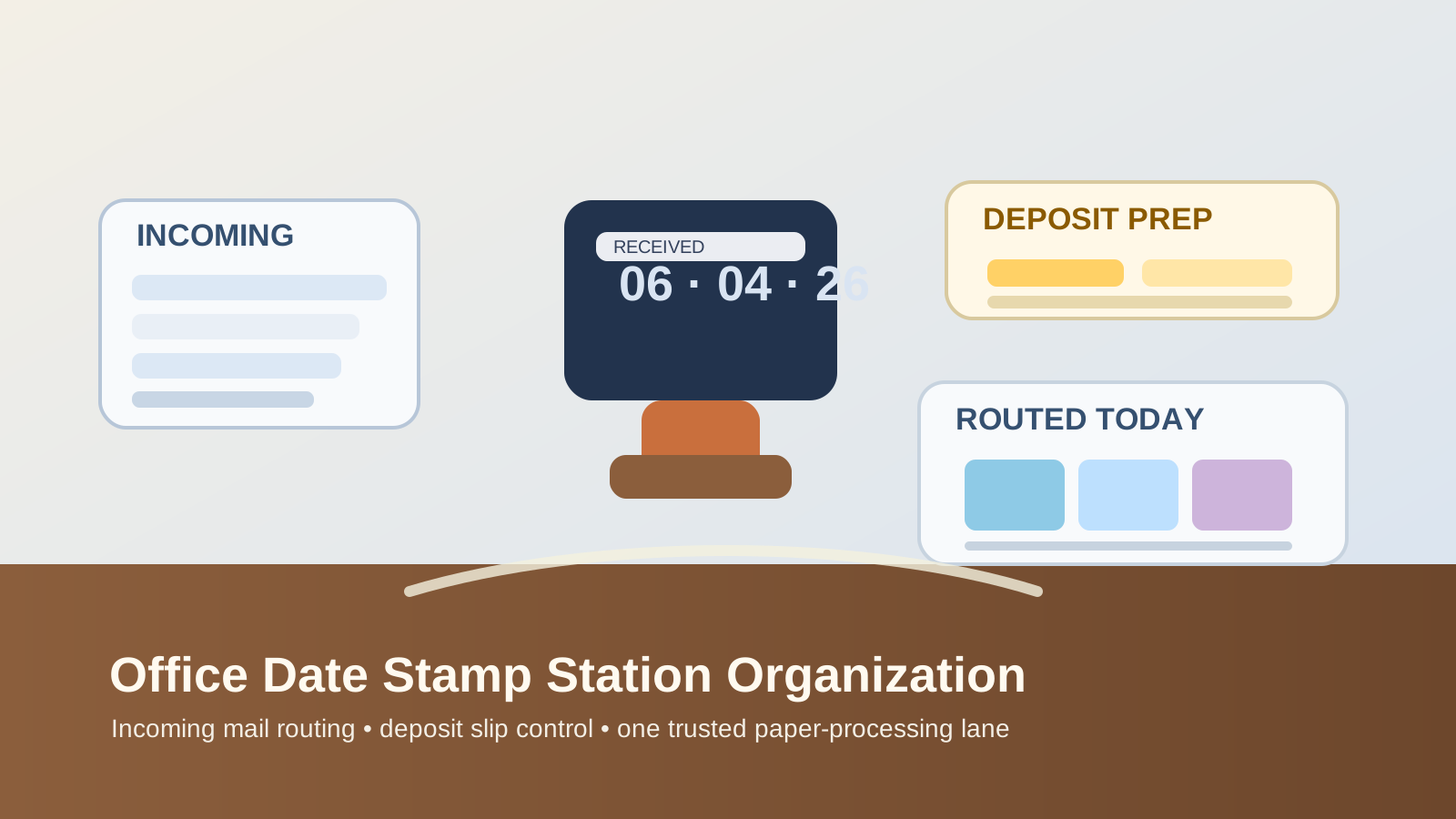
Office Date Stamp Station Organization for Incoming Mail Routing and Deposit Slip Control
A date stamp station usually looks too small to be the real problem.
It is only one stamp. Maybe one ink pad, one stack of deposit slips, one endorsement stamp, one pen, and a couple of routing notes. But when that tiny setup has no stable home, incoming checks get marked on the reception counter, envelopes are opened beside someone’s keyboard, deposit paperwork travels to the copier because that was the nearest open space, and the date stamp itself disappears into the last pile that looked urgent. Suddenly a very short paperwork step is interrupting several desks at once.
If you want to organize an office date stamp station, the goal is not building a miniature mail room. The goal is creating one reliable stop where received-today marking, deposit prep, and internal routing decisions can happen cleanly without spreading across nearby surfaces.
Quick answer
An office date stamp station works better when you:
- keep the date stamp, endorsement tools, and deposit slips in one fixed processing zone
- separate incoming items that need a received mark from items that are already ready to route or deposit
- give checks, cash-related paperwork, and ordinary mail different short-term lanes
- protect one small stamping surface instead of borrowing desk space from reception or accounting
- clear completed items out immediately so the station stays a pass-through, not a paper pile
That setup works because the station supports a short sequence: receive, stamp, sort, route, and clear.
Why date stamp stations create more clutter than they seem to
The mess is rarely about the size of the tools.
It is about the number of paper states that pass through one small step.
A date stamp station may be handling:
- mailed invoices that need a received date
- incoming checks waiting for deposit prep
- forms that need an arrival mark before routing
- envelopes that still need to be opened or attached to contents
- deposit slips and endorsement tools
- exception items with no clear owner yet
- little supplies like pens, clips, and routing notes
When those all touch one flat area without clear separation, people stop trusting what has already been processed. Then they recheck the stamp, restack the papers, or move the pile to another desk just to feel sure.
Build the station around the paperwork sequence, not around the stamp itself
A lot of offices treat the date stamp like one loose tool that can live anywhere.
That is what makes the workflow messy.
The station should be organized around what happens next:
| Zone | What belongs there | What should leave fast |
|---|---|---|
| to stamp | unopened or newly opened items that still need the received mark | anything already routed or logged |
| stamped and routing | items marked and ready to go to the right desk or folder | checks waiting for deposit prep |
| deposit prep | checks, deposit slips, endorsement tools, and bank paperwork in progress | ordinary internal mail |
| exception lane | unclear ownership, missing pages, unreadable remittance details | routine same-day paperwork |
| support tools | date stamp, one pen, one clip cup, one small note area | unrelated office supplies |
This works because it answers the real question people have in the moment: has this item been marked yet, and where does it go next?
Keep the stamping surface tiny but protected
A date stamp station does not need a big table.
It does need one small surface that is not constantly borrowed by other tasks.
If people have to clear coffee mugs, visitor forms, copier output, or someone’s laptop before they can stamp two envelopes, the station will never stay reliable. The stamp step will keep wandering around the office instead.
Even a narrow counter section can work if it is reserved for quick paper handling rather than general overflow.
Separate deposit paperwork from ordinary incoming mail
This is where many offices lose control.
Checks, deposit slips, and endorsement tools are related to incoming mail, but they should not sit mixed with routine envelopes and internal forms. The paperwork may look similar from a distance, yet the risk is different.
A better rule is simple:
- routine incoming paperwork moves toward routing
- checks and deposit materials move toward controlled handling
- unclear financial paperwork goes to an exception lane, not back into general mail
That separation makes it easier to process ordinary arrivals quickly without treating every envelope like a sensitive item.
Stop using the date stamp station as a temporary reading desk
Because incoming paperwork often needs a quick glance, the station easily turns into a mini review area.
Someone opens one envelope and starts reading the invoice. Another leaves a note because the check amount needs confirmation. A third parks a folder there because the deposit slip is not ready yet. Soon the station is not really a date-stamp stop anymore. It is a pile of half-decided paper.
If the item needs deeper review, move it onward after the stamp step. The station should support marking and first sorting, not extended desk work.
Keep the tools limited and obvious
A date stamp area usually needs fewer visible tools than people think.
Keep only the items that support the actual step:
- one reliable date stamp
- one ink pad if required
- one endorsement stamp only if it truly belongs in that workflow
- one pen
- one small stack of deposit slips or routing slips
- one clip or band spot for same-batch paperwork
What should stay out:
- backup stationery
- extra unopened forms
- shipping supplies
- random office scissors and tape
- old envelopes kept for reference
The more unrelated tools gather there, the easier it becomes for live paperwork to shrink into messy side piles.
Give exception items a visible but narrow lane
Exception paperwork is what usually makes the station feel permanently active.
That includes:
- checks with missing backup pages
- invoices that arrived without a clear owner
- envelopes with contents that need explanation
- duplicate copies someone wants to compare before routing
- bank paperwork waiting for one final detail
If those pieces stay mixed with routine stamped items, the whole station starts looking unresolved.
Use one slim review lane for exceptions only. That keeps odd cases visible without letting them block the everyday flow.
A practical setup that works in small offices
If you want a simple default layout, try this:
- left or entry side: one tray for items that still need the date stamp
- center: protected stamping spot with the date stamp and one pen
- right or exit side: routed-today lane for items ready to leave the station
- small separate corner or tray: deposit prep only
- one slim folder or slot: exception paperwork waiting on clarification
That arrangement works because it supports motion. Items arrive, get marked, get sorted, and leave.
A short reset that keeps the station trustworthy
This area usually needs a quick daily reset more than a big reorganization.
Try this five-step closeout:
- move stamped routine items to their next desk, folder, or mail run
- remove finished deposit paperwork from the station
- leave only unresolved exception items in the review lane
- return the stamp, pen, and slips to the same visible home
- clear stray envelopes, scratch notes, and empty clips off the work surface
That reset keeps tomorrow’s first delivery from landing on top of yesterday’s uncertainty.
Where TidySnap helps
A date stamp station often feels too small to photograph, which is exactly why its clutter gets overlooked. One picture can reveal the real pattern fast: incoming envelopes mixed with stamped paperwork, deposit slips parked beside ordinary mail, and the stamp itself drifting into a general paper pile. TidySnap can help you see whether the station needs a better sequence, a tighter tool set, or a cleaner separation between routing work and deposit handling.
Final thought
A well-organized office date stamp station does not just make one tiny tool easier to find.
It removes friction from the first decision point in your paper workflow. When incoming items, stamped items, deposit paperwork, and exceptions each have a clear lane, the station stops interrupting nearby desks and starts doing what it should have done all along: process the paper quickly and send it on.