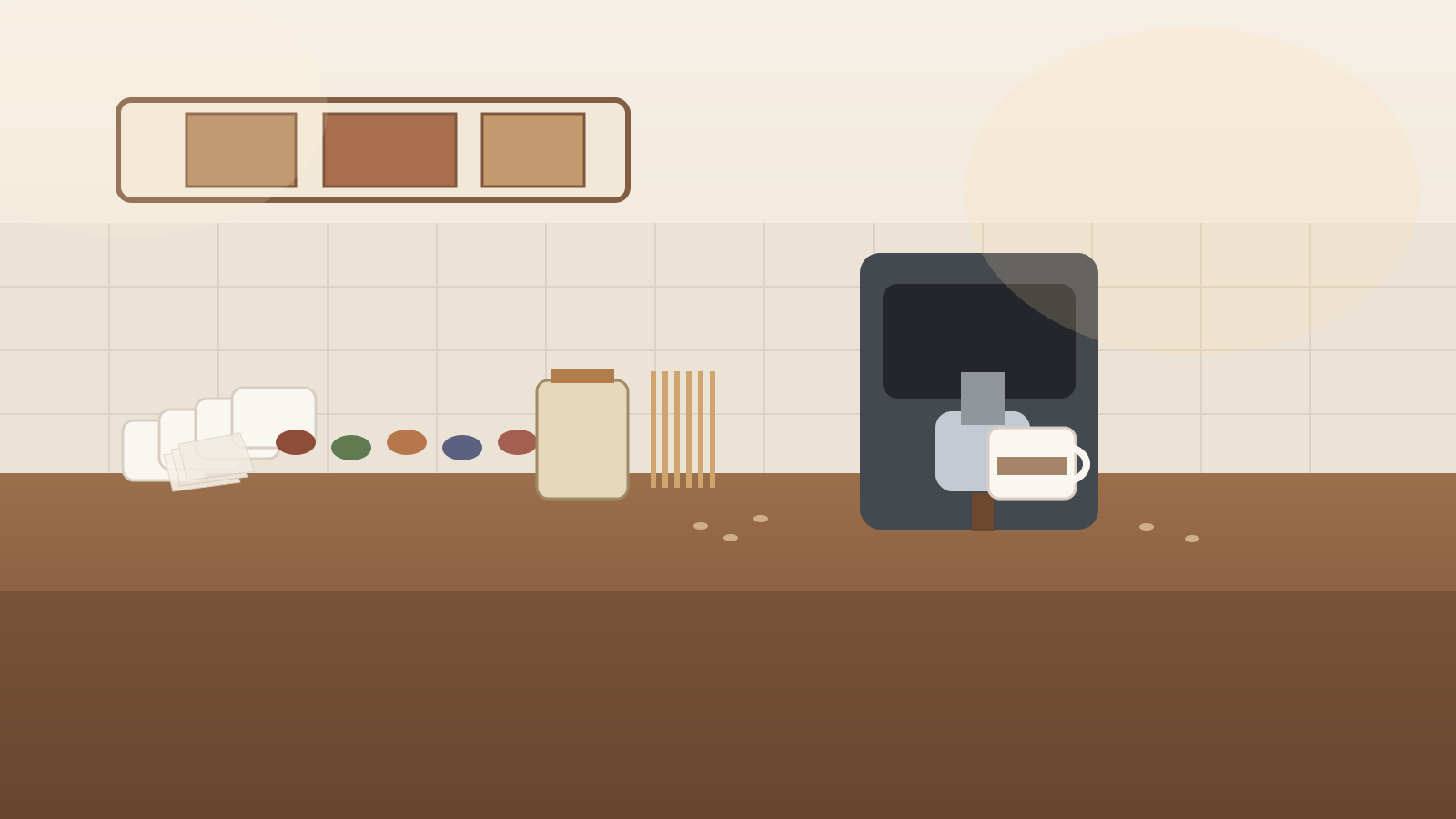
Office Coffee Station Setup for Mugs, Pods, and Morning Refill Traffic
An office coffee station usually does not feel messy because there is too much coffee.
It feels messy because too many tiny actions are sharing the same counter at the same time. Someone is reaching for pods. Someone else is opening sweetener packets. Clean mugs are mixed with mugs that should go to the sink. A box of backup cups gets left out because the front stack ran low. By 9:15, the area is not exactly overflowing, but it is already harder to use than it should be.
If you are trying to organize an office coffee station, the real goal is not making the break room look styled. The goal is making the station easy to move through when several people use it in quick succession.
Start with the four moves that matter most
A coffee station usually works better when you:
- separate brewing supplies from drink add-ins
- keep the front counter limited to what people use during the current cup-making step
- stop backup stock from living in the same zone as daily-use items
- make cleanup visible enough that used mugs and empty boxes do not linger
That usually helps more than buying extra baskets without changing the flow.
Why coffee stations turn messy so fast
Coffee clutter spreads differently from desk clutter or paperwork clutter.
The counter has to support short repeat actions all morning:
- grabbing a mug or cup
- choosing pods, grounds, or tea
- adding sugar, stir sticks, lids, or sleeves
- waiting for a brew cycle to finish
- throwing away wrappers
- dealing with drips, empty boxes, and used mugs
- restocking whatever just ran out
When all of those actions happen in one flat layer, people start improvising. Backup stock stays out in case it is needed. Add-ins drift closer to the machine. Empty cardboard sits on the side because nobody wants to stop the rush just to clear it. The result is not only visual clutter. It is friction.
Build the station around sequence, not around product type
The easiest coffee stations to use usually follow the order people actually move through the space.
| Zone | What belongs there | What should stay out |
|---|---|---|
| grab zone | clean mugs, cups, lids if used, napkins | backup boxes, sweetener overflow |
| brew zone | machine, pods or grounds for current use, filters if needed | syrup collection, dirty dishes |
| add-in zone | sugar, sweeteners, stir sticks, creamers, flavor add-ins | extra mugs, shipping boxes |
| cleanup zone | trash access, wipe cloths, drip tray attention, sink path | unopened stock, decorative clutter |
| backstock zone | refill sleeves, extra pods, extra cups, bulk supplies | anything needed for the next cup right now |
This works because the station starts matching behavior.
People do not need to scan the whole counter for every step. They can move from grab, to brew, to add-ins, to cleanup without crossing over yesterday’s leftovers.
Keep the machine area smaller than you think
A lot of coffee stations feel crowded because the machine becomes the center of every category.
Pods pile up beside it. Sugar packets gather behind it. Mugs get parked on top of the drip area. Someone leaves a spoon there because it was convenient once. Then the machine zone becomes a storage zone.
A better rule is simple: the machine area should hold only what supports brewing itself.
That usually means:
- the coffee machine or kettle
- the pod bin or current coffee canister
- filters if they are part of the daily routine
- one small landing area for the cup being filled
Everything else should move slightly away from the machine so the brew step stays clear.
Separate everyday add-ins from backup supply boxes
This is one of the fastest fixes.
Many office coffee counters look crowded because daily-use items and backup inventory are mixed together. A few sugar packets and stir sticks are normal. Three half-open cartons of cups, a bulk pod case, and extra creamer boxes are not.
Use one rule:
- daily-use items stay on the counter
- refill stock stays below, above, or nearby but not in the main cup-making lane
That split keeps the station from looking like a supply closet at 8:30 in the morning.
Give clean mugs and used mugs completely different paths
Coffee areas get visually gross fast when the mug status is unclear.
If clean mugs are stacked near the machine while used mugs sit beside them waiting for a trip to the sink, the station starts feeling neglected even when the rest of it is fine. People hesitate because they have to inspect what is actually ready to use.
A better setup is:
- clean mugs or cups in one obvious grab zone
- used mugs move directly to the sink, tray, or dishwasher path
- no in-between holding patch on the main counter
The more clearly the station separates ready-to-use from waiting-to-be-cleaned, the cleaner it feels.
Keep wrappers and drips easy to finish, not easy to ignore
Coffee mess often survives because the last step is inconvenient.
If the trash can is too far away, pods and sugar wrappers stay on the counter. If there is no clear cloth or wipe spot, small drips become part of the surface. If the drip tray needs occasional attention but nobody notices until it is full, the whole station starts feeling sticky.
Make cleanup part of the layout:
- keep trash access close to the station
- leave one obvious spot for wipes or a small cleaning cloth
- check whether the machine creates repeat drips in the same place
- remove empty boxes and sleeves as soon as they are done
The easier the finish step feels, the less clutter gets carried into the next round.
What to keep off the counter entirely
If the coffee station already feels overloaded, these are usually the first things to move:
- unopened bulk stock
- duplicate sweetener containers
- extra promotional mugs
- office notices taped near the prep area
- random dishes that belong elsewhere
- unrelated snacks with torn packaging
- spare tools that are only used once in a while
A coffee station usually improves faster when you remove low-frequency clutter than when you keep rearranging the visible supplies.
Reset after the morning rush, not only at the end of the day
This area gets messy in waves.
The biggest pileup often happens in a short period, which means the best reset is not necessarily a full afternoon cleanup. It is a quick pass after the busiest refill block.
A short coffee-station reset can be:
- throw away pods, wrappers, and empty boxes
- return backup stock off the main counter
- move used mugs to the sink or dishwasher path
- restack the grab zone so cups and napkins are easy to reach
- wipe the brew area and drip spots
- leave only the current-use supplies visible
That five-minute reset does more than letting the counter stay half-finished until later.
Where TidySnap can help
Coffee stations are easy to excuse because every item feels temporarily reasonable.
A box of cups is out because the stack ran low. A few mugs are waiting for someone to carry them over. Sweeteners spread because several people used them at once. In a real photo, those little exceptions usually reveal the actual issue: the station has no clear separation between brewing, customizing, cleanup, and backstock.
TidySnap can help turn that visual mess into a simpler layout plan, so the station supports the morning rush without turning the break room counter into a supply spill zone.
Final thought
A good office coffee station does not need to look fancy. It needs to feel easy.
When mugs, brew supplies, add-ins, cleanup, and backup stock each have a clearer role, people stop spreading into every open inch of counter. The station becomes faster to use, easier to refill, and much less likely to stay messy all day.