Office After-Hours Paperwork Drop Box Organization for Forms, Envelopes, and Next-Day Sorting
A lot of office paper clutter starts when the office is technically closed.
Someone drops off a signed packet after reception hours and leaves it on the nearest counter. A sealed envelope meant for HR gets tucked behind a monitor because nobody wants to leave it in plain sight. A client form comes in late, so security sets it beside the visitor log. By morning, the paperwork is all still in the building, but nobody can tell what is urgent, what is confidential, and what already belongs in the next day’s workflow.
If you want to organize an office after-hours paperwork drop box, the goal is not only adding one container by the door. The goal is creating a handoff path that keeps late paperwork secure, separates document types before they spread, and makes the next-day sort fast enough that the drop point does not become a paper mystery zone.
Quick answer
An office after-hours paperwork drop box usually works better when you separate five functions clearly:
- drop point for late paperwork arriving when the main desk is unattended
- privacy layer for sealed or sensitive items that should not sit exposed
- status cues so staff can tell what needs morning review first
- next-day sorting lane for items that came in overnight but still need routing
- support instructions that make the drop process obvious without adding extra front-desk clutter
That usually means giving after-hours forms and envelopes one secure landing point, keeping the live reception counter out of the process, and making the morning handoff about sorting, not detective work.
Why after-hours paperwork creates a different kind of office clutter
Late paperwork does not pile up like active desk work.
It piles up through uncertainty.
The people dropping documents off often do not know exactly where the packet belongs. The people receiving it are not the same people who will process it in the morning. That gap creates a specific kind of clutter:
- signed forms left on open counters
- sealed envelopes mixed with general notes
- packets bent into door-side trays that were meant for something else
- loose sticky notes trying to explain who dropped something off
- confidential items parked in visible places “just until morning”
- reception surfaces inheriting work that happened after reception stopped
That is why the problem is not only paper volume. It is that the handoff happens without a clear system.
Start by separating drop-off from morning processing
This is the most important distinction.
The after-hours drop box is not supposed to do the full job of intake, filing, or review. It is supposed to protect the handoff between the person leaving the paperwork and the team handling it later.
A better setup treats those as two different moments:
- drop-off moment: the document needs a clear, safe place to land
- morning processing moment: the document needs to be checked, sorted, and routed
When offices blur those together, the box area starts collecting half-solutions. A form is left on top instead of inside because someone thinks staff should see it first. A sealed envelope sits beside the box with a note on it because nobody knows the right category. By morning, the station already looks like a mixed paper pile.
Choose a narrow job for the drop box
A lot of document drop points become messy because they are asked to hold everything remotely paper-related.
A useful after-hours paperwork drop box should answer one question well: what can be left safely here when the office is closed?
That usually includes things like:
- signed forms that missed the business-day handoff
- sealed internal envelopes
- completed packets waiting for next-day processing
- badge, key, or file paperwork that belongs to a later office workflow
- one short note if the drop-off needs context
It should not quietly become the home for:
- outgoing mail
- office supply returns
- loose packages
- food-delivery notes
- visitor badge hardware
- random papers that staff do not want to decide about yet
The smaller the job, the easier the station is to trust.
Build around status, not just paper type
A morning sorting station works faster when it can read what kind of handling an item needs before anyone opens a pile.
Instead of treating every envelope and form like the same object, separate the drop path by status:
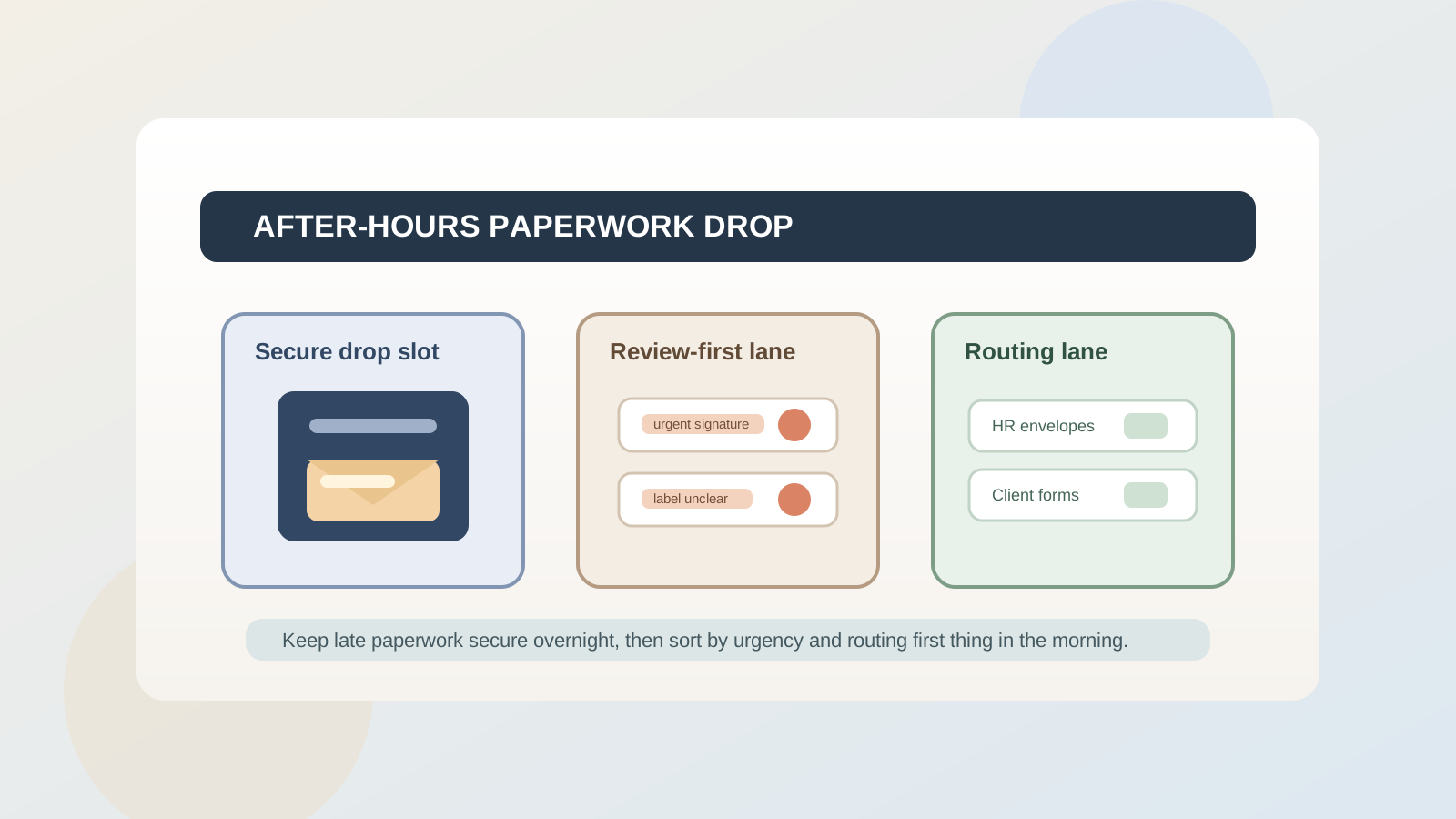
| Zone | What belongs there | What stays out |
|---|---|---|
| secure drop slot | sealed envelopes, signed packets, confidential forms left after hours | open office notes, spare supplies, packages |
| review-first lane | items with time-sensitive notes, incomplete labels, or special morning handling | routine sealed drops already ready for routing |
| routing lane | paperwork already collected from the drop box and waiting for department sort | fresh late arrivals still at the doorway |
| instruction pocket | one short instruction card, blank envelopes if you truly need them | stacks of forms, pens, office extras |
That structure matters because the morning team should not have to re-interpret every single item from scratch.
Keep sensitive paperwork out of the visible desk layer
One reason offices end up with awkward document clutter is that people try to balance visibility with security by leaving things halfway hidden.
A sealed HR envelope sits under a clipboard. A signed reimbursement form gets tucked under a keyboard corner. A packet for payroll goes into a front-desk drawer that also holds pens and tape. None of those are good systems. They are temporary hiding spots that turn into workflow clutter.
If the drop point is meant for after-hours paperwork, it should protect privacy without requiring the next person to hunt for where somebody “safely” placed the document.
That usually means:
- one obvious enclosed drop point
- no exposed stacks beside it
- no backup hiding places on the desk
- no mixing confidential paperwork with general reception supplies
The safest-looking solution is not always the most locked-down one. Often it is simply the one that removes guesswork.
Stop using reception surfaces as overflow for late paperwork
This is where the clutter spreads.
Even if an office technically has a drop box, people often leave items beside it when:
- the slot looks full
- the item is too stiff to fit cleanly
- the envelope has special instructions
- the person assumes the front desk will see it faster if it stays visible
That turns the reception counter, security desk, or side credenza into a second unofficial drop system.
A better rule is simple: if it belongs to the after-hours paperwork process, it should land in the after-hours paperwork system, not beside it.
If certain items genuinely cannot use the same slot or box, that is a reason to define a second clearly labeled lane, not a reason to let the desk surface absorb exceptions.
Make the morning sort a real step, not a vague hope
A lot of paper handoff systems fail because they assume morning staff will “just go through it.”
That usually leads to:
- yesterday’s sealed envelopes still sitting in the box at noon
- urgent forms mixed with routine paperwork
- staff opening the box only when someone asks about a missing packet
- reception inheriting document triage during the busiest part of the day
A better approach is to treat next-day sorting as part of the station itself.
The workflow should be obvious:
- clear the overnight drop point
- move items needing immediate review into the review-first lane
- route routine paperwork into the correct department or processing area
- remove old notes or empty envelopes from the station
- leave the drop point empty enough for the next after-hours cycle
That keeps the box from becoming archive storage for things that only arrived late.
Keep instructions short enough that people actually follow them
After-hours drop boxes often get cluttered by too much explanation.
A sign tries to cover every department. Another note explains what not to leave there. Someone tapes up a second sheet with exceptions. Then a marker note gets added for one special case. Suddenly the drop station looks like a bulletin board.
A better setup uses the shortest clear instruction possible.
Usually people only need to know:
- what can be dropped here
- whether confidential items should be sealed
- whether urgent items need a note
- what not to leave at the station
If the instructions are too long, people stop reading and go back to leaving papers wherever seems safest in the moment.
Common mistakes that make paperwork drop boxes harder to use
Treating all late paperwork as equally urgent
That makes morning sorting slower and encourages people to leave explanatory notes on everything.
Letting the top of the box become a paper shelf
If documents regularly sit on top instead of in the system, the office has created a second clutter layer.
Mixing sealed items with open reference forms
That makes the station look busy and weakens privacy at the same time.
Keeping extra envelopes, pens, and office supplies around the drop point
Support items should stay minimal or the box starts looking like a mini admin desk.
Leaving completed morning sort items near the drop box
That teaches the station to store yesterday’s work instead of handing off today’s.
A practical layout for most office paperwork drop points
If your office has limited space, a simple layout often works:
- at the wall or entry edge: enclosed drop box or slot for overnight paperwork
- just beside it: one narrow review-first holder for items requiring quick attention
- one step deeper into the office: routing lane for sorted morning paperwork
- one small visible sign: short instructions only
That creates a clean sequence: drop, secure, review, route.
Where TidySnap helps
After-hours document clutter is easy to normalize because it is often gone by mid-morning. In a real office photo, though, the pattern shows up quickly: envelopes parked beside the box, forms stacked on the reception edge, and no clear difference between what arrived overnight and what still needs routing.
TidySnap helps you turn that real drop area into a clearer plan for secure handoff, morning review, and next-day sorting based on the space you actually have.
Final thought
A good after-hours paperwork drop box should reduce uncertainty, not create a new pile around the doorway.
When late forms, sealed envelopes, and next-day packets all have one trusted landing point, the office spends less time rebuilding who left what where and more time processing the documents that matter. That is what keeps a small after-hours drop zone from turning into front-desk paper clutter by breakfast.