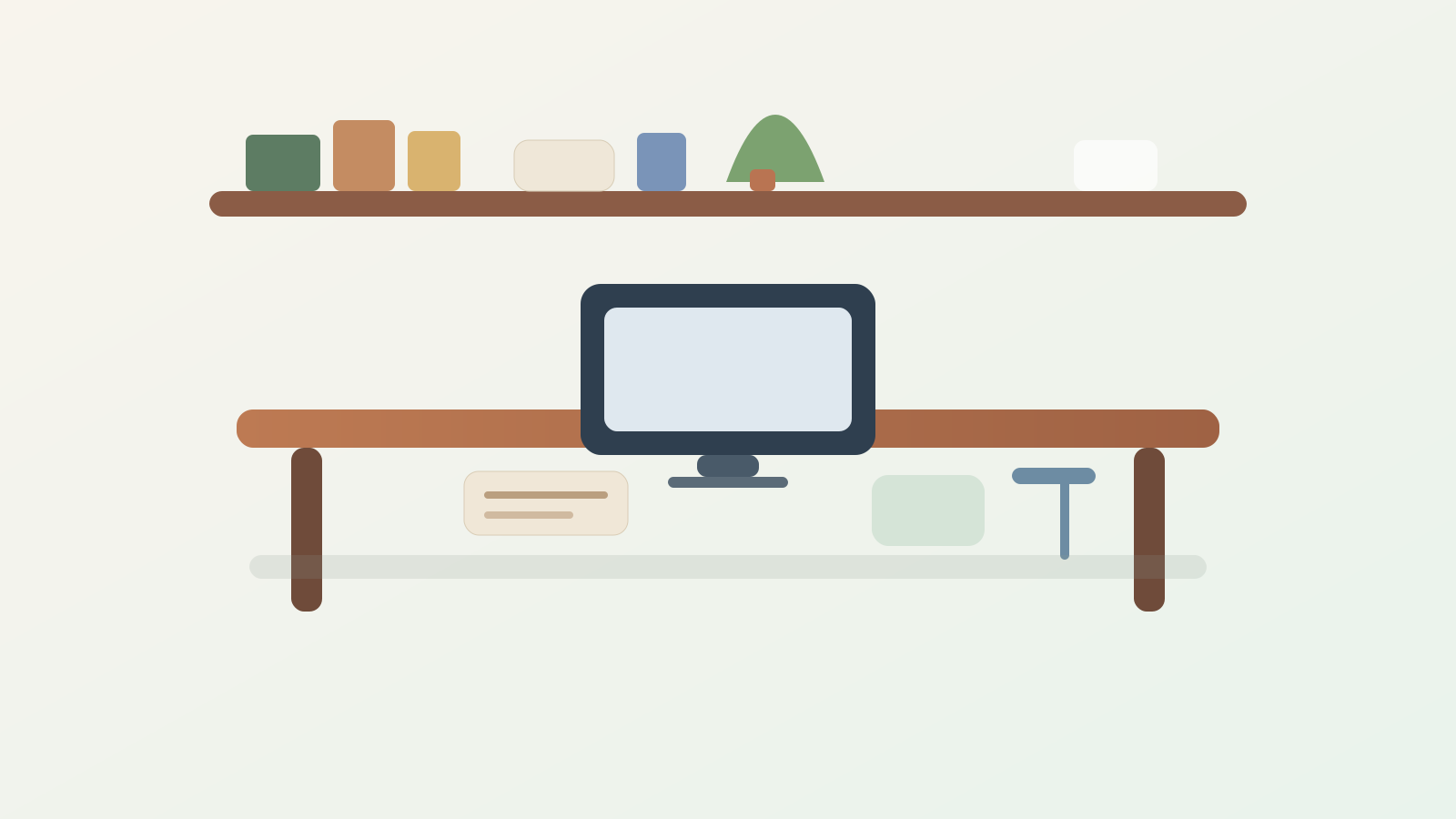
How to Organize a Small Office Wall Shelf Above Your Desk Without Creating Head-Level Clutter
A wall shelf above a desk can solve surface clutter while making the workspace feel more crowded every time you sit down.
That happens because items stored above eye level behave differently from items in a drawer or side cabinet. A spare notebook on the shelf feels harmless. Then a row of binders joins it. Then a charger box, a stack of paper, a mug of pens, a small plant, and a few things you are keeping nearby for later. The desktop may look cleaner, but the space starts feeling top-heavy because the shelf is holding active tools, backup stock, and visual noise directly above the work zone.
If you want to organize a small office wall shelf well, the goal is not to fill the shelf neatly. The goal is to keep the area above your desk light enough that the workspace still feels open, readable, and easy to work in.
The short version
A small office wall shelf above a desk works better when you:
- keep heavy or bulky backup items off the shelf
- store only a few stable categories above the desk
- separate display items from work supplies
- stop active paper from creeping upward
- leave visible empty space so the shelf does not feel like a low ceiling
A good wall shelf should support the desk below it, not loom over every task you do there.
Why shelves above desks feel cluttered faster than side storage
Clutter above the desk creates pressure in two ways at once.
First, it stays visible all day. Even tidy-looking objects still ask for visual attention when they sit in your direct work zone.
Second, upper storage attracts delayed decisions. Things go there because they feel related to the desk but do not fit cleanly on the desk itself. That often includes:
- reference books you do not open daily
- backup notebooks and unopened supplies
- framed items and decor mixed with office tools
- chargers, adapters, and small tech boxes
- papers that do not have a real next step yet
- containers that start organized and end up miscellaneous
That combination is why an overhead shelf can make a workspace feel busier than a full drawer.
Decide what the shelf is for before you sort it
Most shelves above desks become messy because they are doing too many jobs at once.
A better shelf usually has one main role:
- light reference shelf for a few books or manuals
- display shelf for a few visual items with almost no supplies
- support shelf for one or two stable office categories kept out of the desk lane
What usually fails is the mixed version: decor beside binders, paper beside tech extras, daily tools beside storage boxes, and all of it living in one narrow strip.
If the shelf has no single job, it becomes a place where desk overflow gets promoted instead of removed.
Use a weight rule, not just a category rule
Wall shelves above desks feel worse when they carry items that look or feel physically heavy.
Even if the shelf is sturdy, thick binders, full paper stacks, boxed supplies, and dense organizers make the workspace feel compressed. That is especially true in small offices, alcove desks, and home work corners where the shelf sits close to your seated sightline.
A practical rule is to keep the upper shelf for lighter, simpler items and move heavier storage elsewhere.
| Better above-desk shelf items | Better somewhere else |
|---|---|
| one or two slim reference books | full binders and archive folders |
| one small tray of stable supplies | extra reams, stock packs, and refill boxes |
| one framed item or plant | large baskets and dense storage bins |
| one labeled container with one purpose | mixed backup supplies |
This keeps the shelf from becoming a visual overhang above your workstation.
Keep active paper off the shelf
Paper on an upper shelf almost always turns into stale paper.
People place pages there because the desk is already busy and the shelf feels close enough to count as organized. Soon the shelf is holding printed agendas, receipts, notes to file, forms you still need to check, and envelopes you do not want to lose.
That paper usually stays too visible to ignore and too awkward to process well.
A better rule is simple:
- active paper stays in the desk work lane or one upright holder
- finished paper leaves the desk area
- reference paper gets a separate home outside the shelf if it is not used often
The shelf above your desk should not become a suspended paper backlog.
Avoid storing grab-all office supplies at head level
One of the fastest ways to ruin a wall shelf is to use it for loose general supplies.
Pens, sticky notes, clips, chargers, batteries, tape, adapters, and spare cables look small enough to live there together. But mixed small items create visual grit. They also make the shelf harder to maintain because nothing has a clean boundary.
If supplies must live above the desk, keep them narrow and specific. Good examples include:
- one pen cup only if the desk surface truly needs the room
- one labeled pouch for current call accessories
- one slim tray for stamps or tools tied to a repeat task
Bad examples include anything that amounts to office stuff, random tech, or extras for later.
Leave empty space on purpose
People often treat a wall shelf like a storage challenge: if there is room, something should go there.
That instinct is exactly what makes shelves above desks feel crowded.
Open space matters more here than it does in a drawer because the shelf stays inside your visual field. Empty space keeps the shelf from acting like a second wall of tasks. It also makes it easier to see what really belongs there and what drifted in because there was a gap.
A useful target is to leave part of the shelf visibly open even after you think you are done organizing it.
Separate display from function instead of blending them
Many overhead shelves feel messy because every object is trying to justify its place in a different way.
A photo frame is there because it looks nice. A notebook is there because it might be useful. A storage box is there because it hides small clutter. A plant is there because the shelf looked too bare. A charger is there because it was nearby.
None of those decisions is huge on its own. Together they create a shelf that does not know whether it is a display ledge or office storage.
Choose one dominant mode.
If the shelf is mostly functional, keep decor minimal. If the shelf is mostly visual, keep work supplies off it.
That single choice removes a lot of mixed-purpose clutter.
Watch for three signs the shelf is hurting the workspace
1. The desk is cleaner, but the room still feels busy
That usually means the clutter moved upward instead of away.
2. You avoid putting new things away because the shelf already looks full
That usually means too many categories are sharing one strip.
3. Items above the desk are not clearly used weekly
That usually means the shelf is holding backup storage in premium visual space.
A simple reset for an above-desk wall shelf
Once or twice a week:
- remove any paper that landed there temporarily
- move backup supplies back to closed storage
- clear out any mixed small-item cup or tray
- reduce decor if it is crowding functional items
- restore one visible open section before you stop
This reset works because overhead clutter builds slowly. Most of it arrives as one harmless extra item at a time.
Where TidySnap helps
An above-desk shelf is hard to judge while you are sitting right under it. In a full workspace photo, the problem is usually easier to spot: the shelf looks heavier than the desk below it, active paper is parked too high, or small supplies are creating visual static across the whole wall zone.
TidySnap helps you see whether the shelf is actually supporting the workspace or simply moving clutter from the desktop to head level.
Final thought
A good wall shelf above a desk should make the workspace feel lighter, not more stacked.
When the shelf has one job, carries only a few light categories, and keeps open space visible, it adds support without creating that crowded feeling overhead. That is what makes a small office desk area easier to use day after day.