How to Organize a Package Hold Shelf at Work Without Losing Track of Pickups
A package hold shelf usually looks manageable right up until it stops being readable.
One delivery is waiting for someone in accounting. Two small boxes belong to a new hire who is out today. A padded envelope is ready for pickup, but nobody labeled it clearly. Then one more package gets set on the floor because the shelf already looks full, even though half the items on it should have left yesterday.
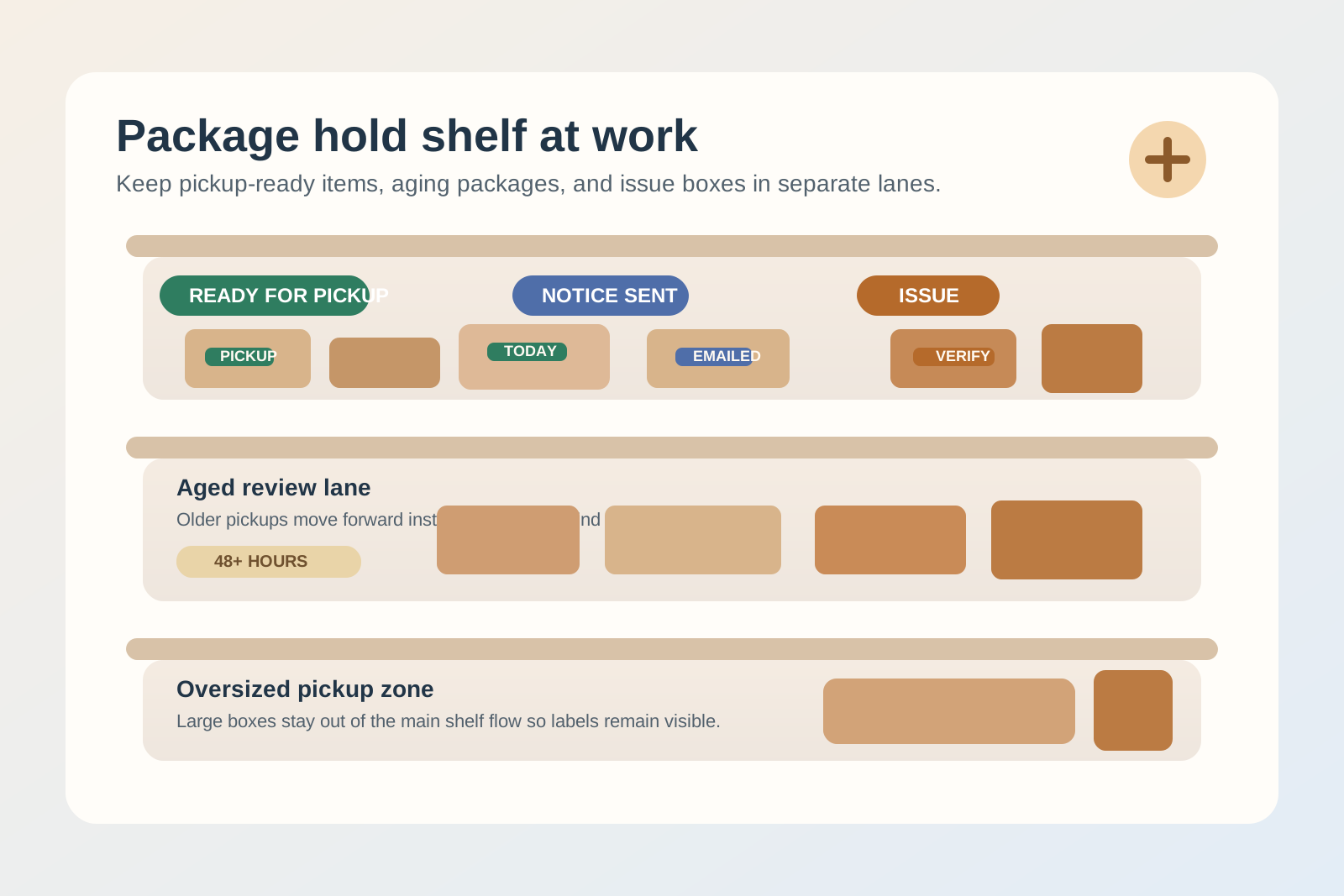
If you are trying to organize a package hold shelf at work, the goal is not to build a mini warehouse inside the office. The goal is to make pickup status obvious. You need a holding area that tells people what is ready, what is waiting on notice, what has a problem, and what should leave the shelf before it quietly turns into permanent storage.
Quick Answer
To organize a package hold shelf at work:
- separate ready-for-pickup items from unresolved items
- label by pickup status, not just by person name
- keep oversized and floor items out of the main shelf flow
- give aged packages a review lane instead of letting them disappear in back
- stop using nearby desks and counters as overflow hold space
- reset the shelf often enough that old pickups do not blend into new arrivals
That usually works better than adding more bins without changing how the pickup flow works.
Why Package Hold Shelves Get Messy Fast
A package hold area creates a different kind of clutter than a receiving station.
Receiving is about arrival and check-in. A hold shelf is about waiting, reminders, and handoff.
That means one small area may be holding:
- fresh packages that are already logged
- items waiting for the recipient to come by
- deliveries that need a second notice
- oversized boxes with nowhere obvious to go
- problem items with missing names or unclear destinations
- returns or personal items that should not be mixed into normal office pickups
When all of those states share one shelf, the area stops answering the most important question: can this item leave right now?
Organize by Pickup State First
The fastest fix is to sort by next action, not by package type.
| Shelf zone | What belongs there | What should leave fast |
|---|---|---|
| ready for pickup | labeled items with a clear recipient and no blocker | unresolved packages and old leftovers |
| notice sent | items that are waiting on the recipient to come by | fresh deliveries that have not been communicated yet |
| issue or hold | unclear ownership, damaged items, signature-needed handoff, or anything needing follow-up | routine pickup-ready items |
| aged review | packages that have sat too long and need escalation or relocation | same-day pickups |
This matters because a small shelf feels much calmer when every item has an obvious status.
Stop Treating the Shelf Like a Backup Receiving Counter
A lot of office package clutter happens after the delivery was already handled correctly.
The box got checked in. The recipient was notified. But instead of leaving promptly, the item stayed on the nearest shelf, counter, or floor spot. Then more packages arrived and the whole area started acting like a second receiving station.
A package hold shelf works better when it has a narrow job:
- hold already-processed items
- make pickup easy
- surface exceptions quickly
- push aging items toward a decision
If people are opening boxes there, breaking down cartons there, or storing inbound deliveries there before check-in, the shelf is doing too many jobs.
Keep the Front Edge for Fast Pickups
The easiest items should be the easiest to grab.
Keep the most routine pickup-ready packages:
- at eye level or front edge
- grouped clearly by status
- labeled so a coworker can identify them without moving other items
- separated from odd-size boxes that block access
If someone has to reshuffle the whole shelf to get one padded mailer, the setup is already slowing the handoff.
Give Large or Awkward Items Their Own Rule
Big boxes create visual overload fast.
If oversized deliveries share the same main shelf as small pickup-ready items, they hide labels, block access, and make the whole area look more behind than it really is.
A better rule is simple:
- standard pickup items stay on the main shelf
- oversized items go to one clearly marked floor spot or side zone
- fragile or special-handoff items go to the issue lane, not the general pickup lane
That keeps the shelf readable instead of letting one bulky delivery dominate the whole area.
Use Aging as a Visible Status
The biggest problem with hold shelves is not always volume. It is age.
Old packages blend into new packages surprisingly well, especially when labels are small or handwritten in a hurry. Then the shelf becomes a place where nobody is quite sure what is still active.
Add one simple aging rule such as:
- same-day and next-day pickups stay in ready for pickup
- older pickups move to notice sent or aged review
- anything that has lingered too long gets escalated, relocated, or returned to the responsible team
The goal is to stop old packages from becoming background scenery.
Keep Nearby Work Surfaces Out of the Package System
A hold shelf fails when the overflow spreads.
That overflow often lands on:
- a reception side counter
- an admin desk corner
- the floor under the shelf
- a spare chair
- a filing cabinet top
Once that happens, the office no longer has one pickup area. It has several partial ones, which makes items harder to find and easier to forget.
If the main shelf is full, the answer is usually faster clearing and clearer status zones, not turning more random surfaces into part of the package workflow.
A Simple Layout for Small Offices
Most offices do not need a complex mailroom system. They need clearer boundaries.
A practical package hold setup might include:
- one main shelf section for pickup-ready items
- one smaller section for notice sent or waiting items
- one issue spot for unclear or special-handoff packages
- one separate floor marker or side spot for oversized boxes
- one visible date or aging cue on each held item
That is often enough to keep the area usable without overbuilding it.
A 5-Minute Shelf Reset
This kind of area stays cleaner with short resets than with occasional deep cleanups.
- remove anything that was picked up but left behind by mistake
- move old packages into the aged review lane
- pull unclear or unlabeled items into the issue spot
- clear oversized boxes out of the main shelf flow
- leave the front section readable for the next pickup window
A package shelf feels organized when people can trust what they are seeing at a glance.
Where TidySnap Helps
If your office package area keeps spreading onto desks, counters, or floor space, TidySnap can help you work from a real photo of the shelf and surrounding surfaces. That makes it easier to see whether the problem is aging pickups, oversized boxes, unclear labels, or a hold area that is quietly doing the job of three different stations.
FAQ
What should go on a package hold shelf at work?
Only items that have already been received and are genuinely waiting for pickup or handoff, plus a small exception area for unresolved items.
How do I stop packages from piling up on the floor?
Separate oversized items from normal shelf items and move aging pickups out faster. Floor overflow usually means the hold area is mixing too many statuses.
Should package hold shelves be organized by employee name?
Names help, but pickup status matters more. A shelf is easier to manage when it shows what is ready, what is waiting, and what has a problem.
Why does the shelf still look full even when there are not many packages?
Because mixed package states create uncertainty. A few old, unclear, or bulky items can make the whole shelf feel blocked.