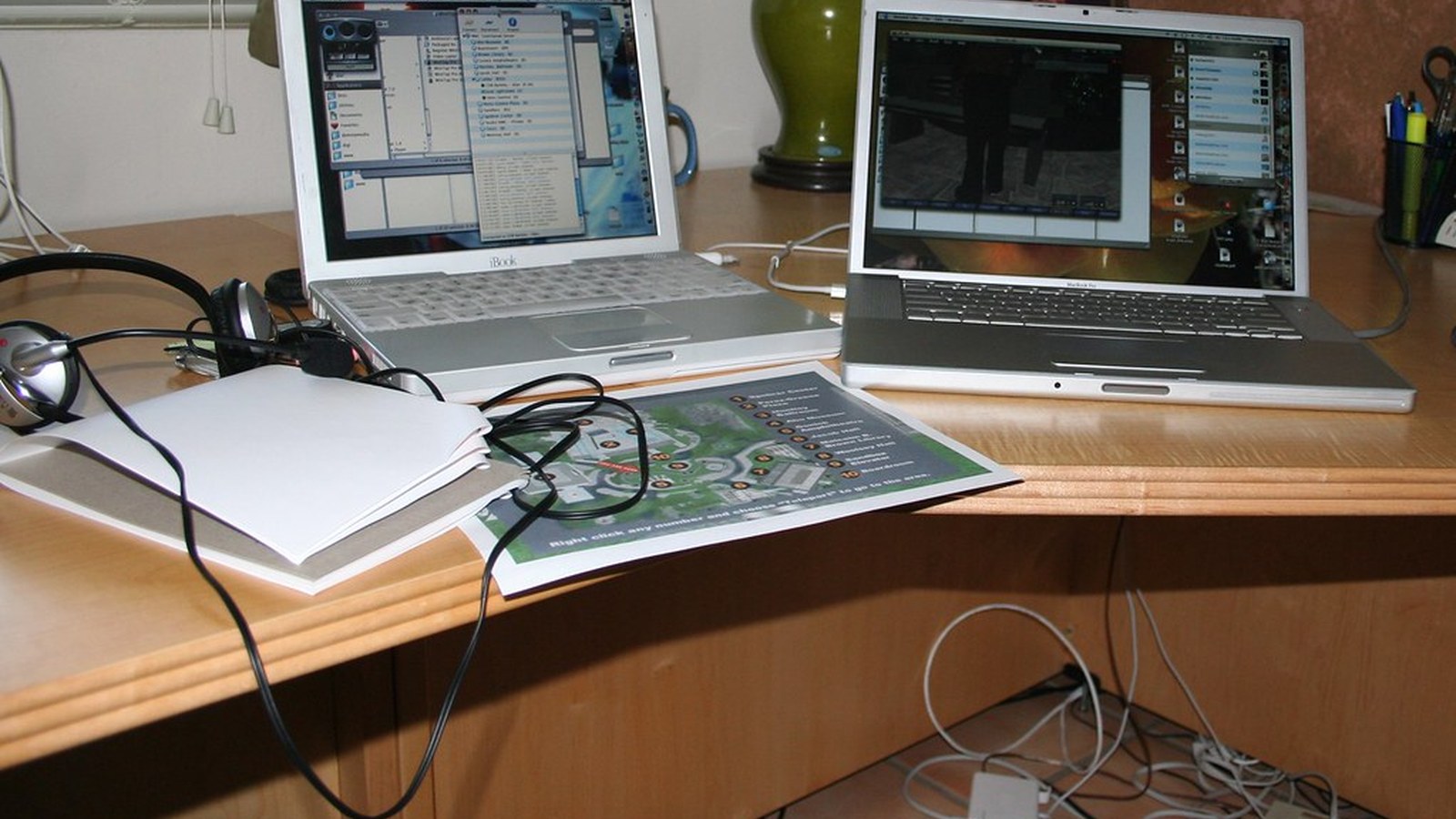
How to Organize a Desk With One Laptop for Work and One for Personal Use
Two laptops on one desk can feel efficient for about ten minutes. After that, they often start overlapping in ways that make the whole workspace feel crowded.
There are two chargers, two login worlds, two sets of accessories, and usually one surface that was not really designed for both at once. The answer is not to pretend they are the same. The answer is to give each one a clearer role.
Quick Answer
To organize a desk with one laptop for work and one for personal use:
- choose which laptop gets the primary daily position
- give the second laptop a support or parked position
- keep only one central keyboard-and-mouse lane
- reduce duplicate accessories on the desk
- separate work and personal charging paths if possible
- reset the desk so the active mode is obvious at a glance
Why Two-Laptop Desks Feel Chaotic
The clutter is not just physical. It is also contextual.
A two-laptop desk often contains:
- two chargers
- two screen positions competing for attention
- double the cable spread
- duplicate notebooks or accessories
- mixed work and personal items sharing the same center lane
The desk feels crowded because it is trying to be two desks at once.
Choose a Primary Mode
Most people do not truly use both laptops equally at the exact same time.
Ask which mode leads most often:
| Primary mode | Better layout choice |
|---|---|
| work-first | work laptop centered or closest to primary screen |
| personal-first | personal laptop gets the main lane |
| frequent switching | one laptop centered, second parked in a consistent side position |
The key is that one laptop should clearly lead instead of both fighting for the middle.
Park the Second Laptop Intentionally
The second laptop can still stay accessible without behaving like clutter.
Good options include:
- one side position on a stand
- one rear-side parked zone
- one vertical stand if your workflow allows it
- one nearby shelf or return surface when not active
What usually fails is keeping both laptops flat and fully open across the same central work area.
Keep One Input Lane
Even with two laptops, the desk usually needs one main lane for:
- typing
- mouse movement
- one notebook or task list
- temporary work during the day
If both laptops force you to split that lane in half, the surface will never feel clear.
Reduce Duplicate Desk Gear
A dual-laptop setup often accumulates duplicates:
- two mice
- two chargers left out
- two notebooks
- several adapters
- extra cables for backup situations
Keep visible only what supports the active mode. The more duplicates stay out, the less calm the desk will feel.
Separate Work and Personal Boundaries
Sometimes the desk feels messy because the categories are mixed more than the hardware is.
Simple boundaries help:
- work notebook on one side, personal notebook off the desk until needed
- one tray for personal accessories
- one support zone for work tools
- one consistent shutdown habit when switching modes
Those cues make the setup easier to read mentally, not just visually.
Watch the Charging Paths
Two laptops can create ugly cable crossover quickly.
A better rule is:
- primary laptop charging follows the main route
- secondary laptop charging stays to one side
- spare chargers do not stay visible unless active
When both chargers cross the center line, the desk feels busier immediately.
Where TidySnap Helps
TidySnap helps when both laptops feel necessary but the workspace still feels confused. A photo-based plan can show whether the problem is screen competition, duplicate gear, cable routes, or missing boundaries between work and personal use.
FAQ
Should both laptops stay open all day?
Only if your workflow truly needs that. Otherwise, letting one laptop live in a support position usually frees valuable space.
What is the biggest mistake in a two-laptop desk setup?
Treating both laptops like they deserve the exact same central position.
How do I keep work and personal use from blending together?
Use clear zones, fewer duplicate tools on the surface, and a consistent active-mode layout.