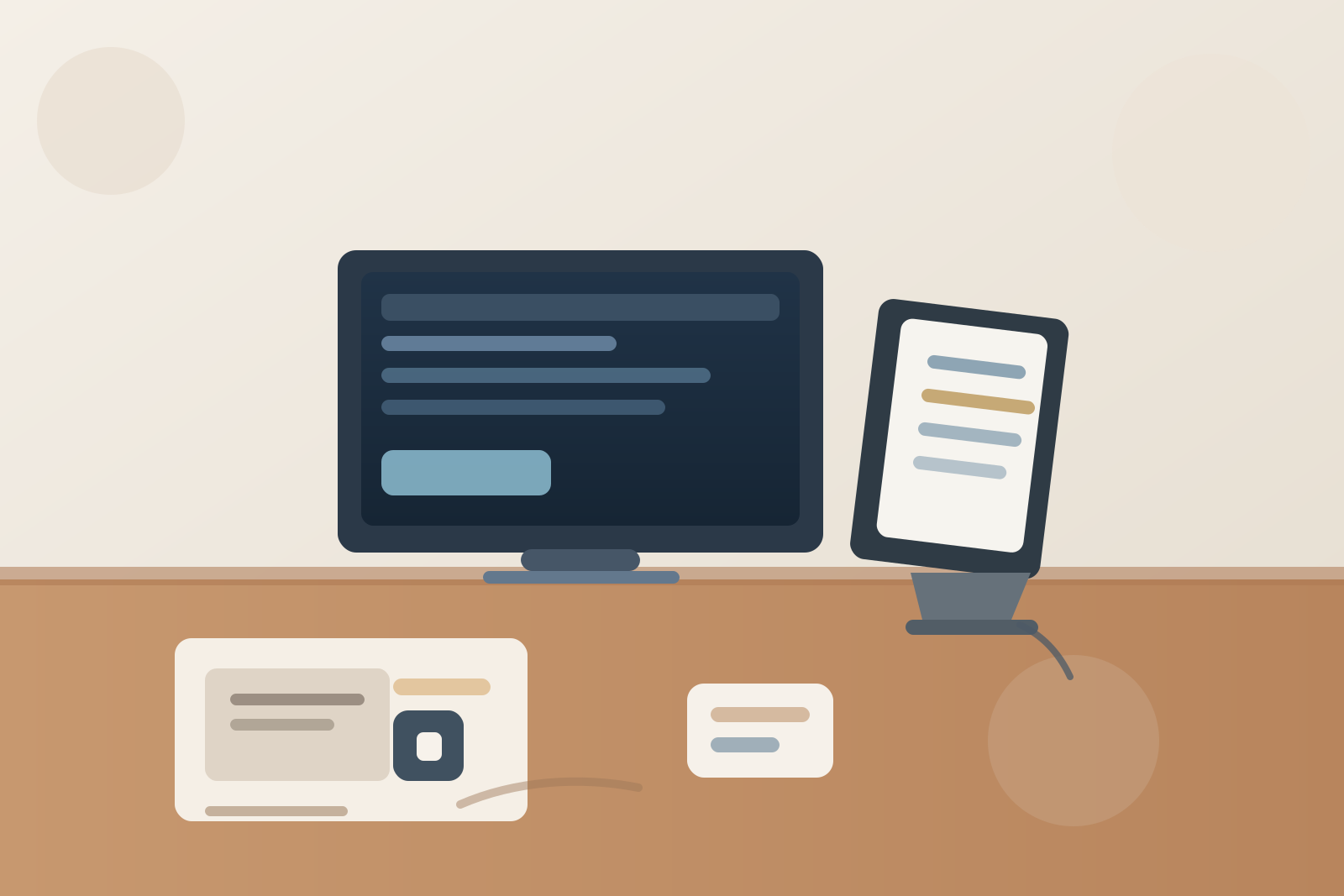
How to Organize a Desk With a Tablet Stand Without Building a Second-Screen Pile
A tablet stand seems like a simple upgrade. You set the tablet upright, free a little desk space, and make it easier to read, tap, or glance over without hunching.
Then the area around it starts multiplying.
A charging cable stays plugged in. A stylus needs a place to land. A cleaning cloth appears because fingerprints show up fast. A notebook slides over because the tablet is now holding reference material. Soon the stand is not just holding a tablet. It is anchoring a whole side setup that competes with your main desk for space and attention.
If you want to organize a desk with a tablet stand, the goal is not making the stand invisible. The goal is keeping the tablet useful for the specific tasks it supports without letting that side of the desk turn into a second-screen pile.
Fast answer
To organize a desk with a tablet stand, give the stand one fixed position outside the main typing lane, decide whether the tablet is there for viewing or for active tapping, keep only one live accessory with it, and clear the support clutter that tries to gather around the base. A tablet stand should help one task at a time, not create a second workstation beside the first one.
What usually goes wrong with tablet stands
Tablet stands create clutter differently than phones, e-readers, or full monitors.
A phone is small enough to tuck away. A monitor feels permanent enough that people usually build around it on purpose. A tablet stand sits in the middle. It looks temporary, so people keep adding just one more related thing next to it. But it is also stable enough that those things stop moving.
That is how one corner collects:
- the tablet and its charging line
- a stylus or spare stylus tips
- a cleaning cloth
- short reference notes
- earbuds or a headset for quick calls
- one adapter or dongle that “belongs with the tablet”
The problem is rarely the stand itself. The problem is that the tablet area starts acting like a second command center without clear limits.
Decide whether the stand is for viewing or tapping
A lot of tablet-stand clutter comes from asking one setup to support too many modes at once.
If the tablet is mostly there for reading outlines, checking schedules, viewing reference material, or watching one supporting app, the stand should behave like a glanceable display. It does not need every support item spread around it.
If the tablet is there for active tapping, drawing, signing forms, or controlling meetings, the setup needs more reach and more deliberate accessory placement.
Pick the primary mode first:
- Viewing mode: keep the stand slightly farther back or off to one side
- Tapping mode: keep the stand closer, with a little clear hand space in front of it
- Temporary task mode: treat the stand like a pull-in tool that resets after the task block ends
Once you decide the real job of the stand, it becomes much easier to stop random extras from gathering around it.
Keep the stand out of the main typing lane
A tablet stand often causes trouble because it drifts closer and closer to the center of the desk.
At first it sits off to the side. Then you need to tap something quickly, so it moves inward. Then the charging cable follows. Then a notebook lands beside it because you are using both screens at once. Before long, your keyboard, mouse, and current paper are all trying to share space with a stand that was supposed to be secondary.
The cleaner rule is simple: the main work lane still belongs to your primary task.
That usually means the tablet stand belongs:
- just outside the keyboard arc
- beside the monitor instead of in front of it
- on the writing side only if you do not need that side for paper
- farther back if the tablet is mainly for reference, not touch input
If the stand keeps forcing your hands to work around it, it is no longer supporting the desk. It is competing with it.
Keep the stand from becoming a second-screen shelf
The base of a tablet stand is one of those flat spaces that invites leftovers.
People set down:
- sticky notes
- a pen
- an SD card or flash drive
- the stylus cap
- a small adapter
- receipts or scraps that seem temporary
Those items make the stand feel busier than it is, and they also make the tablet harder to pick up, wipe down, or reposition. If the stand is always surrounded by tiny objects, the desk starts feeling like it has two messy centers instead of one.
A better rule is that the tablet zone gets only:
- the stand
- the tablet
- one active accessory
Everything else should either live one layer away or leave after the current task ends.
Give the tablet one parked accessory, not a support pile
Tablet setups often become messy because every accessory feels essential.
Maybe you sometimes need:
- a stylus
- a charger
- a small Bluetooth keyboard
- earbuds
- a dongle
- a cleaning cloth
But needing those things sometimes does not mean they all belong on the desk all day.
Choose the one accessory that truly belongs with the stand during normal use. For most people, that is either the stylus or the charging cable. Keep the rest nearby but off the surface in a drawer, side tray, pouch, or small bin.
This matters because tablet clutter usually grows through convenience logic. Every extra item stays “just in case,” and then the whole area hardens into a mini tech station.
Keep reference items behind the stand, not around it
A tablet stand often shows up on desks where people are comparing information: notes beside a calendar, a task list beside a laptop, a sketch beside a document, or a checklist beside a meeting window.
That comparison work creates paper drift fast.
Instead of letting pages, note cards, or scraps fan out around the stand, try one of these constraints:
- place one notebook directly behind the stand when not in use
- keep one slim note card under the keyboard instead of beside the tablet
- use one vertical holder or tray for backup reference pages
- keep temporary paper on the opposite side of the desk from the stand
The key is avoiding the halo effect where every support note starts orbiting the tablet base.
Reset to laptop-first mode after the tablet task ends
Tablet stands often make desks feel permanently half-switched.
You finish the meeting, review, sketch, or side-reading task, but the stand stays angled toward you, the stylus stays out, and the cable still cuts through the same corner. That visual state tells your desk the temporary setup never ended.
A short reset helps:
- return the tablet to its parked angle
- remove the extra note or reference page
- put away the stylus or keyboard if it was only needed for that task
- tuck the charging line back to its shortest clean path
- make the main desk surface feel primary again
That reset is what keeps the stand useful instead of permanently expanding.
When the tablet stand should move off the desk
Not every tablet stand belongs on the desk full time.
Move it off the surface when:
- you only use it for occasional calls
- it mostly holds a tablet that is charging between uses
- the desk is already small
- the stand blocks your writing side or mouse path
- your main computer already handles the same reference job better
In those cases, a nearby shelf, credenza, or drawer home may keep the workspace cleaner than forcing the stand to stay visible.
Where TidySnap helps
TidySnap helps when a tablet stand feels harmless but keeps attracting extra gear. A photo of the desk can show whether the stand has drifted into the main lane, whether support items are clustering around the base, and whether the tablet setup is acting like a second workstation instead of a controlled side tool.
FAQ
Where should a tablet stand go on a desk?
Usually just outside the main typing lane, close enough to glance at easily but not so central that it competes with the keyboard, mouse, or writing area.
Should a tablet stay on the stand all day?
Only if you truly use it throughout the day. If it mostly sits idle or charges between short tasks, moving it off the desk can keep the workspace simpler.
What should stay next to a tablet stand?
Only the tablet, the stand, and one live accessory such as the stylus or charging cable. Extra support items should stay nearby but off the main desk surface.