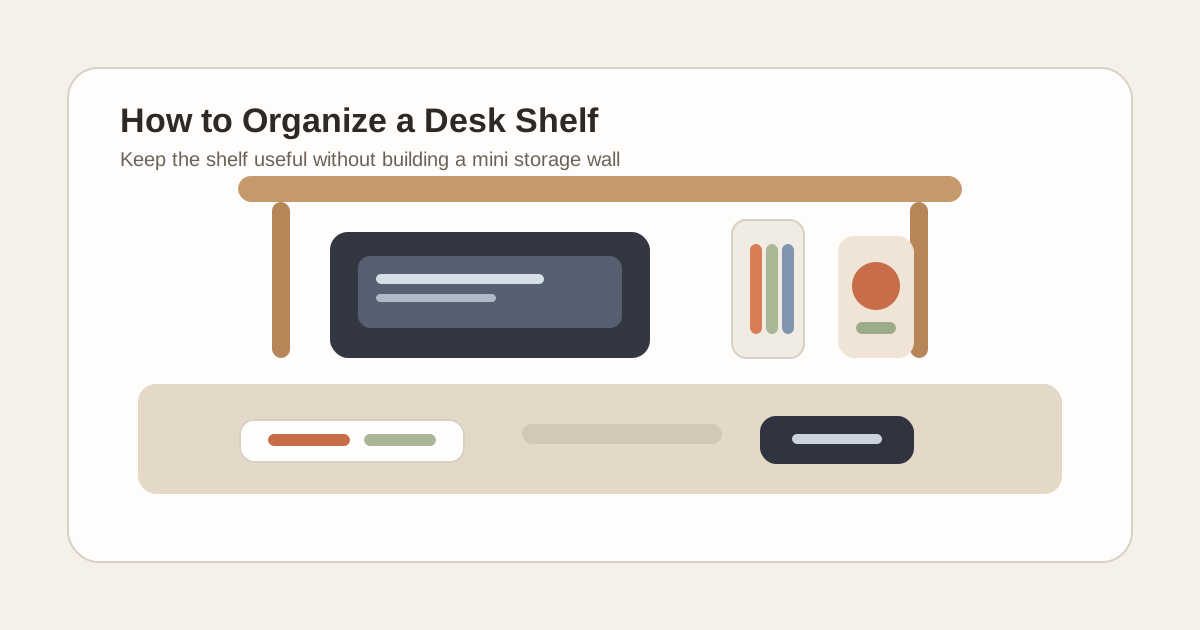
How to Organize a Desk Shelf Without Turning It Into a Mini Storage Wall
A desk shelf can make a workspace look better in one afternoon and feel worse by the end of the week.
The surface under the shelf gets cleaner, so it feels like a win. Then the upper ledge starts collecting chargers, sticky notes, spare notebooks, packaged accessories, mail, headphones, and decorative extras that seemed too small to matter. Before long, the desk itself looks less crowded, but the whole setup feels heavier because the clutter moved upward instead of actually leaving.
If you want to organize a desk shelf well, the goal is not to fill every tier. The goal is to keep the shelf supporting the desk instead of becoming a small storage wall right in front of you.
Quick answer
To organize a desk shelf without creating new visual clutter:
- give the shelf one support role instead of several mixed jobs
- keep daily work items in the main desk lane, not parked above it
- limit the shelf to stable items that do not need constant reshuffling
- stop the top ledge from becoming backup storage for paper and cables
- leave visible empty space so the whole setup still feels open
A desk shelf usually works best when it holds a few anchored support items and leaves the rest of the workflow on the desk where you can actually use it.
Why desk shelves create clutter differently
A drawer hides clutter. A deep desk hides clutter behind your reach line. A monitor riser hides clutter in the center.
A desk shelf does something else. It puts clutter at eye level.
That matters because even when the desk surface is technically cleaner, a crowded shelf keeps broadcasting unfinished decisions. Old notes, unopened supplies, spare cables, little boxes, and items you are “keeping nearby for now” stay visible all day. The desk may have more free inches, but the setup still feels busy.
That is why shelf organization is less about storage capacity and more about visual discipline.
Decide what the shelf is actually for
Most desk shelves get messy because they are asked to do too many jobs at once.
People use the same shelf for:
- monitor lift
- headphone parking
- sticky notes and pens
- unopened supplies
- charging gear
- decor
- papers that do not have another home yet
That mix is what makes the shelf feel overloaded fast.
Pick one primary role first. In most workspaces, the shelf should be one of these:
- screen support for a monitor plus one or two stable accessories
- desk-clearing support for one notebook, one dock, or one headset stand
- light reference ledge for one current planner or one slim document holder
If the shelf is trying to be a drawer, mail slot, charger station, and display area at the same time, it will always feel fuller than it needs to.
Keep the lower work lane open for real tasks
A desk shelf is useful only if the area beneath it becomes easier to work in.
Protect that lower lane for live work such as:
- keyboard and mouse movement
- one active notebook
- one document you are using now
- comfortable hand space in front of the screen
If the shelf pushes you to start storing things both above and below the same spot, the desk becomes stacked instead of organized.
A good test is simple: if you still cannot open a notebook comfortably under the shelf without moving extra items first, the shelf is not improving the workflow yet.
Stop storing backup paper on the top ledge
Paper is one of the fastest ways to make a desk shelf feel crowded.
A short stack of printed notes, bills, meeting handouts, reference sheets, or unopened mail looks harmless at first because the shelf seems like a safer place than the main desk. But paper on an upper ledge usually becomes a slow archive of things you do not want to decide about.
A better rule is:
- active paper stays in the work lane or one upright holder
- finished paper leaves the desk area
- reference paper gets one separate home outside the shelf if it is not needed daily
The top of the shelf should not become a waiting room for paper.
Keep cables and charging gear off the shelf unless they are permanent
Desk shelves attract charging clutter because they feel like a tidy place to set tech extras.
One cable for your phone becomes two backup cables. Then a charger block stays there. Then earbuds, a battery pack, and a spare adapter join in. Soon the shelf edge starts looking like a tiny electronics counter.
Only keep charging gear on the shelf if it belongs there every day and does not spread visually. Usually that means:
- one dock that stays connected
- one neatly routed charging cable
- one lamp cord if the lamp lives there
What should usually leave:
- backup adapters
- loose cable coils
- packaging for accessories
- gadgets waiting to be set up later
The shelf should support your desk, not become the place where small tech decisions go to stall.
Use one side as support and leave the rest lighter
Many shelves feel crowded because every inch gets treated equally.
A better setup is to create one small support side and one quieter side.
For example:
| Shelf area | Good use | What to avoid |
|---|---|---|
| one side | dock, headset stand, one pen cup, one small tray | mixed paper piles, several loose gadgets |
| center | monitor or open visual space | stacked decor, tall clutter walls |
| other side | one current notebook or one compact reference item | backup storage, unopened supplies |
This keeps the shelf readable from a distance and usable from the chair.
Be careful with decor because shelves make it easy to overdo it
A desk shelf often invites decorative creep.
Once the shelf exists, it feels natural to add a plant, a figurine, framed card, candle, speaker, and one more small object because there is finally somewhere to put them. But visual items multiply faster on a shelf than on a flat desk because they sit closer to eye level.
If you want the setup to feel calm, treat decor like punctuation, not like filler.
One or two intentional items are usually enough. If the shelf needs many small objects to avoid looking empty, it is already being used too much.
Watch for signs the shelf is becoming a storage wall
Your desk shelf is drifting in the wrong direction if:
1. You keep moving objects down before starting real work
That usually means the shelf is holding active items badly instead of supporting them.
2. The items on it are all different sizes, categories, and time horizons
That is a sign the shelf has become a place for undecided things.
3. The desk surface is clearer, but the whole setup still feels visually noisy
You probably moved clutter upward instead of reducing it.
4. You cannot tell what on the shelf is used daily
If everything looks equally permanent, nothing is clearly supporting the workflow.
A five-minute desk-shelf reset
At the end of the day, do this quick reset:
- remove any paper that drifted onto the top ledge
- return loose cables and adapters to a drawer or side organizer
- leave only the stable support items that belong there daily
- clear visual gaps around the monitor or center line
- make sure the lower work lane is ready for tomorrow without rearranging the shelf first
That reset works because desk-shelf clutter builds gradually. It usually comes from many small “leave it there for now” decisions.
Where TidySnap helps
Desk shelves are hard to judge in real time because they often make the desk surface look cleaner while adding a second layer of visual clutter above it.
TidySnap helps you see whether the shelf is truly supporting the workspace, whether paper and chargers are creeping upward, and which items should move off the shelf entirely so the whole desk feels lighter.
Final thought
A good desk shelf should make your workspace feel calmer, not more stacked.
When the shelf has one clear job, the top ledge stays light, and the area below it stays open for real work, you get the extra structure without turning your desk into a miniature wall of stuff.